

Back in October of 1988, I was alone in my one-bedroom bungalow on Formosa Avenue when Kirk Gibson hit his memorable walkoff home run to win the first game of the World Series for the Dodgers. A loud gasp of excitement and shock burst from my throat, and I immediately jumped to my feet and opened the outside door so I could hear the honking horns, firecrackers and victorious shouts in my neighborhood.
Crickets. Nothing. And this was just half a block from teeming Sunset Boulevard. I realized then that Los Angeles is such a vast, compartmentalized city that it tends to swallow up noise, events, and social interaction like high tide rolling over a sand castle.
Which explains why life today in Occupied Los Angeles is so devastating and surreal.
Every few hours, the few reliable social media platforms that are left bring news of fresh horrors perpetrated on our beloved, soulful, and terrorized Latino community. Far from the stated goal of rooting out “criminals”, the Federal government seems hell bent on rounding up and removing every brown-skinned resident they can get their hands on—whether documented or not. Seeing those residents currently make up 48.6% of the 9.6 million people in Los Angeles County, it could take a while.
Much like the European Jews of the 1930s, devastated family members have no idea where their loved ones have been taken or if they’ll return. Many of the abductors are apparently deputized “cops” without uniforms, badges or warrants, and coming soon after a fake policeman politically assassinated a Minnesota lawmaker and her husband, this is downright terrifying.
Aside from the economic disruption created when dedicated workers are suddenly removed from farms, businesses and construction sites, it’s a traumatizing event for the entire region. I pass a car wash or a guy with a leaf blower and wonder if they’ll be there the following day. Normal life is exhausting enough here without the added fear and stress of a military-style occupation that by all evidence feels completely unnecessary. Because mainstream media has largely chosen to accept the administration’s warped view that L.A. is a city of riots, people back east have been messaging to ask what our “war zone” is like—when there is virtually nothing warlike happening.
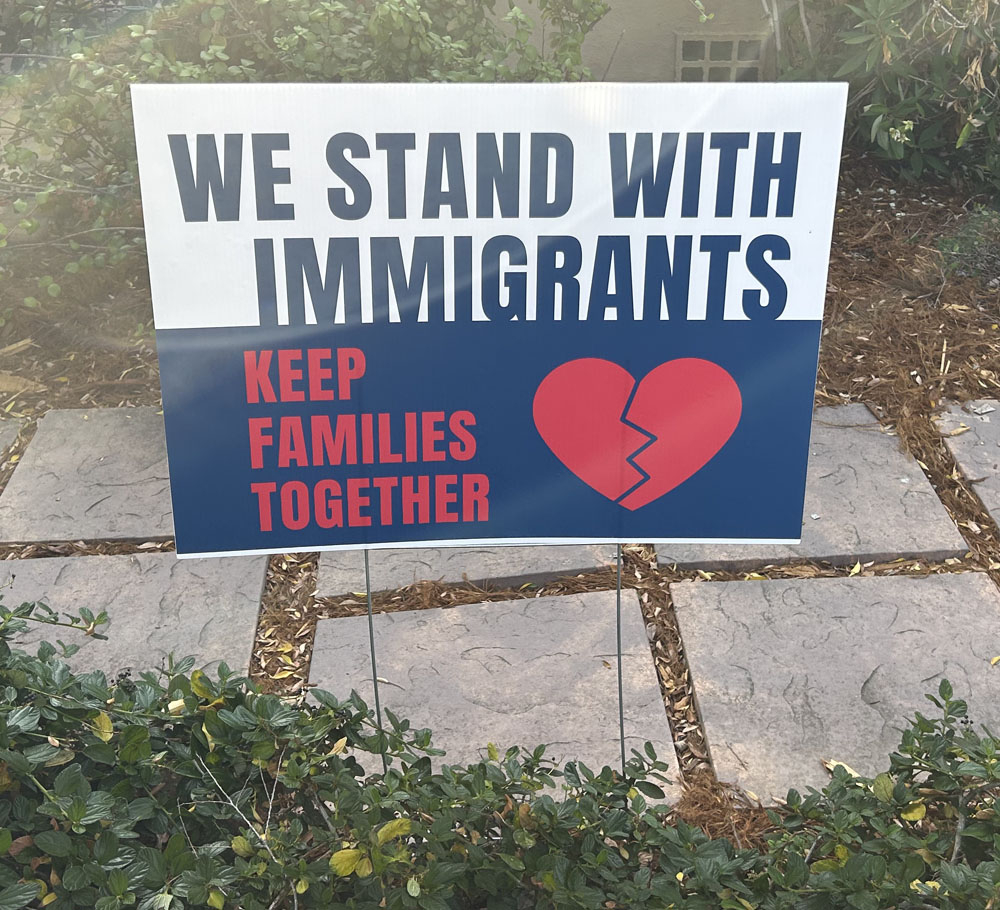
Weirdly, many of us continue to go to the market, walk our dogs, weave through traffic, book dinner reservations, attend parties and concerts, hike in the hills or ride our bikes while nearly half the city is afraid to leave their homes. We bring up the troubling subject with friends and neighbors when we can, unsure how it will be received. Losing ourselves in TV shows and sporting events can also provide temporary relief, though It’s hard to concentrate and nearly impossible to stay off our phones.
California is a wonderful state and Los Angeles a massively diverse community that works on so many levels. My guess is most of the people who hate it have never been here, choosing to believe the myths and stereotypes the climate and natural beauty tend to generate. During the wildfires back in January, the lack of empathy for the scores of non-wealthy people who lost their homes was startling, as was the unwarranted ridicule heaped on our overwhelmed first responders.
Thankfully, we’ve been able to persevere through our many natural disasters; what we cannot accept are fabricated ones.

 Jeff Polman