Back in October of 1988, I was alone in my one-bedroom bungalow on Formosa Avenue when Kirk Gibson hit his memorable walkoff home run to win the first game of the World Series for the Dodgers. A loud gasp of excitement and shock burst from my throat, and I immediately jumped to my feet and opened the outside door so I could hear the honking horns, firecrackers and victorious shouts in my neighborhood.
Crickets. Nothing. And this was just half a block from teeming Sunset Boulevard. I realized then that Los Angeles is such a vast, compartmentalized city that it tends to swallow up noise, events, and social interaction like high tide rolling over a sand castle.
Which explains why life today in Occupied Los Angeles is so devastating and surreal.
Every few hours, the few reliable social media platforms that are left bring news of fresh horrors perpetrated on our beloved, soulful, and terrorized Latino community. Far from the stated goal of rooting out “criminals”, the Federal government seems hell bent on rounding up and removing every brown-skinned resident they can get their hands on—whether documented or not. Seeing those residents currently make up 48.6% of the 9.6 million people in Los Angeles County, it could take a while.
Much like the European Jews of the 1930s, devastated family members have no idea where their loved ones have been taken or if they’ll return. Many of the abductors are apparently deputized “cops” without uniforms, badges or warrants, and coming soon after a fake policeman politically assassinated a Minnesota lawmaker and her husband, this is downright terrifying.
Aside from the economic disruption created when dedicated workers are suddenly removed from farms, businesses and construction sites, it’s a traumatizing event for the entire region. I pass a car wash or a guy with a leaf blower and wonder if they’ll be there the following day. Normal life is exhausting enough here without the added fear and stress of a military-style occupation that by all evidence feels completely unnecessary. Because mainstream media has largely chosen to accept the administration’s warped view that L.A. is a city of riots, people back east have been messaging to ask what our “war zone” is like—when there is virtually nothing warlike happening.
Weirdly, many of us continue to go to the market, walk our dogs, weave through traffic, book dinner reservations, attend parties and concerts, hike in the hills or ride our bikes while nearly half the city is afraid to leave their homes. We bring up the troubling subject with friends and neighbors when we can, unsure how it will be received. Losing ourselves in TV shows and sporting events can also provide temporary relief, though It’s hard to concentrate and nearly impossible to stay off our phones.
California is a wonderful state and Los Angeles a massively diverse community that works on so many levels. My guess is most of the people who hate it have never been here, choosing to believe the myths and stereotypes the climate and natural beauty tend to generate. During the wildfires back in January, the lack of empathy for the scores of non-wealthy people who lost their homes was startling, as was the unwarranted ridicule heaped on our overwhelmed first responders.
Thankfully, we’ve been able to persevere through our many natural disasters; what we cannot accept are fabricated ones.
I have a very odd relationship with The White Lotus. I was hooked on the first season of HBO’s non-flinching study of entitled, flawed travelers in remote locations until hotel manager and Emmy-winner Murray Bartlett took an actual dump in a guest’s suitcase in the season finale—an act so gross and unnecessary to put on screen that it turned me off from the entire series for many months. I refused to begin watching Season Two until I started hearing great things about it, and once I gave in, was blown away by its story, characters, humor, intrigue and Sicilian locations.
Now that I’m finally up to date on Season Three, it’s become clear what makes Mike White’s series so enjoyably addicting—and what ultimately drew me back into its fold. Namely, everything: superb writing, acting, direction, cinematography, and musical score—a seductive, almost sensual immersion into the remote “paradises” these people have traveled to. We become observers of human behavior at its best and worst, and study the emotional and spiritual journeys these people are on. Because some of them are scoundrels and jerks, we don’t always like them, but their warring qualities and interactions are so beautifully constructed that it’s fascinating to just watch the results.
Season Three, without giving away much of the plot, is set in an exclusive jungle resort on the shores of Thailand, and it’s by far the most engaging and harrowing White Lotus world we’ve encountered. It is also a stunning meditation on Buddhism, particularly on its non-violent beliefs, and how the characters react to the all-encompassing Buddhist vibe of their “wellness resort” tells you everything about who they are.
Every actor in the cast is fabulous, and it’s largely because their characters are so multi-dimensional and interesting. Jason Isaacs and the amazing Parker Posey play a wealthy North Carolina couple with two sons and a daughter who went there so their daughter Piper could work on a religion thesis. Carrie Coon, Leslie Bibb, and Michelle Monaghan are three women who have been friends for years, each with their own personal baggage and unspoken resentments that seem to be on a collision course.
Best of all for me are Walton Goggins and Aimie Lou Wood, as Rick and Chelsea. Rick, a walking time bomb of bitterness, is there on a troubling mission you learn about after a few episodes, and is a perfect foil for Chelsea, a free-spirited English girl from Manchester who stays with Rick just because she thinks she can ease his pain; the wellness center clearly isn’t doing it. Goggins, who was darkly fabulous as the chief villain on Justified and the killer cowboy robot on Fallout, is beyond belief here, a smoldering cauldron of deep hurt that rivals early Brando, with deliveries like classic Jack Nicholson—without the smile.
Every scene in Mike White’s scripts is expertly constructed, with every line of dialogue either emotionally revealing or frustratingly bottled up. Sam Rockwell arrives in the sixth episode and has a monologue so unforgettable it even makes Walton Goggins speechless. Add to that the hypnotic, Thai-flavored musical score by Cristobal Tapia de Veer and Ben Kutchins cinematography that completely puts you in their tropical world, and you are in no hurry to leave it. I have no idea how the final episodes of this third season will play out, but I’ll sure be glued to my screen when they do.
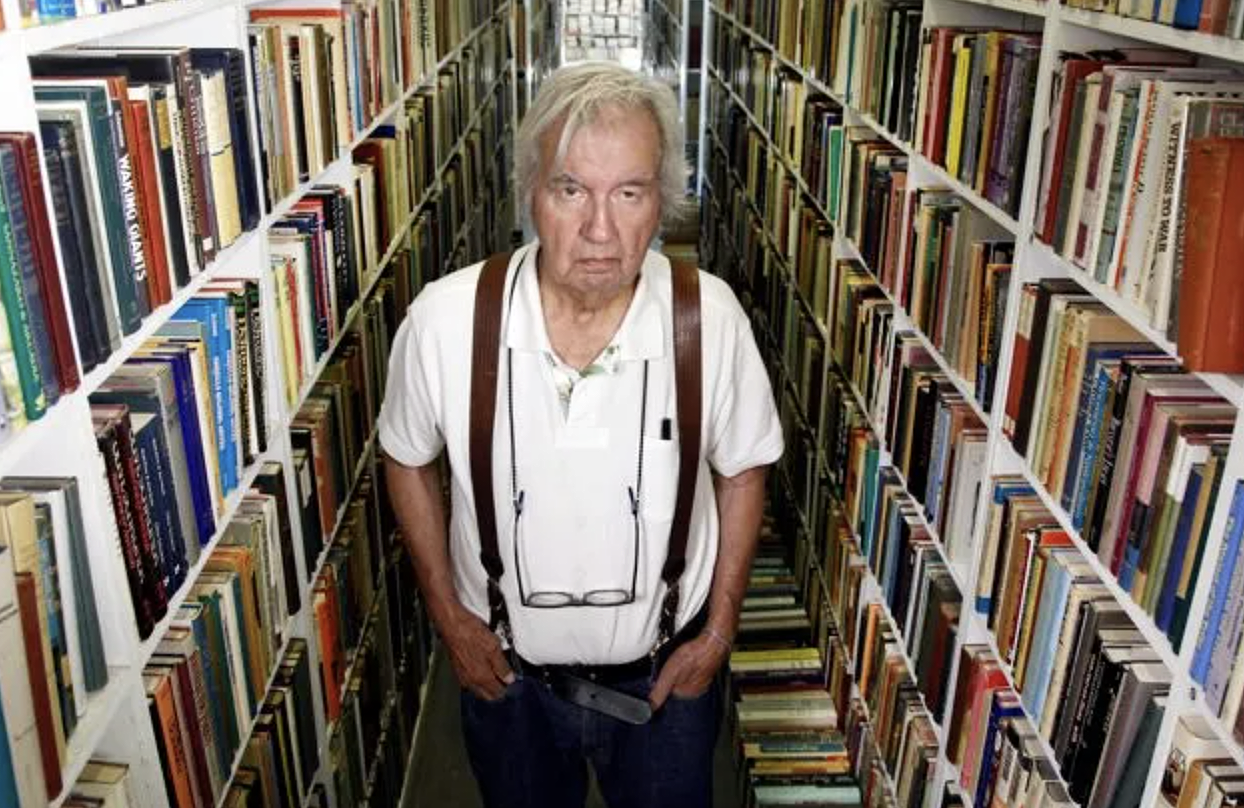
Did you know that Larry McMurtry may be the greatest American novelist? I never thought so, until I suddenly, recently did.
After a good friend’s father passed away a few years back, his entire collection of McMurtry books showed up on my front steps free of charge, so I plucked out about 25 volumes. I had read his masterpiece Lonesome Dove soon after it was published in the late 1980s, and eventually went on to The Last Picture Show—which became my favorite black and white film of all time in the early 70s. But I had no concept of McMurtry’s vast open range of wonderful stories, his ability to effortlessly shift between time periods, his infectious sense of humor, both in his dialogue and much of his witty prose, and his calm, immensely readable style that can form a relatable character and burrow into his or her soul with minimal words. I call this style “Third Person McMurtry”, and since being gifted my modest collection, I’ve happily plowed through a dozen of his books, including a wonderful non-fiction account of driving around America called Roads and a compendium of short Western fiction he edited called Still Wild.
But there are more gems than I can count. The Berrybender Narratives, a sweeping, four-volume saga of an eccentric English family’s pioneer experience, has enough humor, tragedy and brutally earned joy to last a ten-episode limited series, if someone should ever attempt it. I still haven’t read his Terms of Endearment (the movie version won a Best Picture Oscar), but I imagine the tone and themes are similar to what I found in The Desert Rose and The Late Child, a sad and hilarious two-book story of a fading Las Vegas showgirl named Harmony who makes life way too hard on herself. In the sequel, published in 1995, she learns her daughter died of AIDS in New York and embarks on a road trip there with her two crazy sisters and brilliant, precocious young son. It’s easily one of the warmest, funniest books I’ve ever read, and look forward to picking it up again.
Lonesome Dove has been enjoying a recent resurgence, no doubt because it beautifully defines our country’s burning hope and spirit in a time when evil forces are trying their best to snuff them out, but its new audience is well-earned regardless. Texas Ranger-turned-cattleman Gus McCrae is one of the more likable characters ever created—Robert Duvall’s epic portrayal in the TV mini-series imprinting him on our minds—and the Pulitzer and acclaim he received for the book was so great he then wrote two sequels, Streets of Laredo and Commanche Moon, followed by an amazing prequel Dead Man’s Walk, with McCrae and his lifelong friend Woodrow McCall as impressionable young men. I’m reading all four books in narrative order, but have paused before my upcoming re-read of Lonesome Dove to explore some of McMurtry’s other works.
Those include two novels he penned with screenwriting collaborator Diana Ossana, a wonderful writer herself. Pretty Boy Floyd is their thrilling historical re-telling of the 1930s gangster’s flight from the law. Floyd is an angry, dangerous guy and a tough main character to root for, but you sure enjoy hearing him and his cohorts and neglected family members speak. Equally memorable is Zeke and Ned, which I’m halfway through at the moment. It’s the harrowing tale of Zeke Proctor and Ned Christie, the last Cherokee warriors and veterans of the Trail of Tears as they try to survive in an encroaching white man’s world.
As if his library of great novels isn’t enough, Brokeback Mountain won McMurtry and Ossana a Screenplay Adaptation Oscar in 2006. They took a touching short story by Annie Proulx (featured in the Still Wild collection) and fleshed it out with additional character subplots and dialogue to create a deeply moving classic, in my view one of the best screen love stories ever filmed.
There are three other non-fiction books on my McMurtry shelf I have yet to dive into: Film Flam, Hollywood, and Oh What a Slaughter, an account of famous massacres in the American West. But that’s okay; I have enough to indulge in right now. McMurtry died four years and two days ago, and as each of his stories sweeps me up and carries me to my reading chair like a prairie wind, I keep thinking about the quote from T. J. Whipple that he used to open Lonesome Dove:
“We live in the civilization they created, but within us the wilderness still lingers. What they dreamed, we live, and what they lived, we dream.”
Late last night I read a devastating post on Threads by a 22-year veteran of NASA, a woman with seven straight “perfect performance” reviews who just lost her job along with countless other civil servants due to the destructive whims of two megalomaniac toddlers. It didn’t help me get to sleep, but it sure inspired me to wake up and pay overdue tribute to Apollo 13—the best motion picture about America to not win Best Picture. Nominated for nine Oscars back in 1996, it won exactly two—for editing and sound mixing. Whoop-de-doo. In a year that Braveheart won Picture and Direction for the racially enlightened Mel Gibson, Apollo 13 director Ron Howard wasn’t even nominated, which to me was a federal crime.
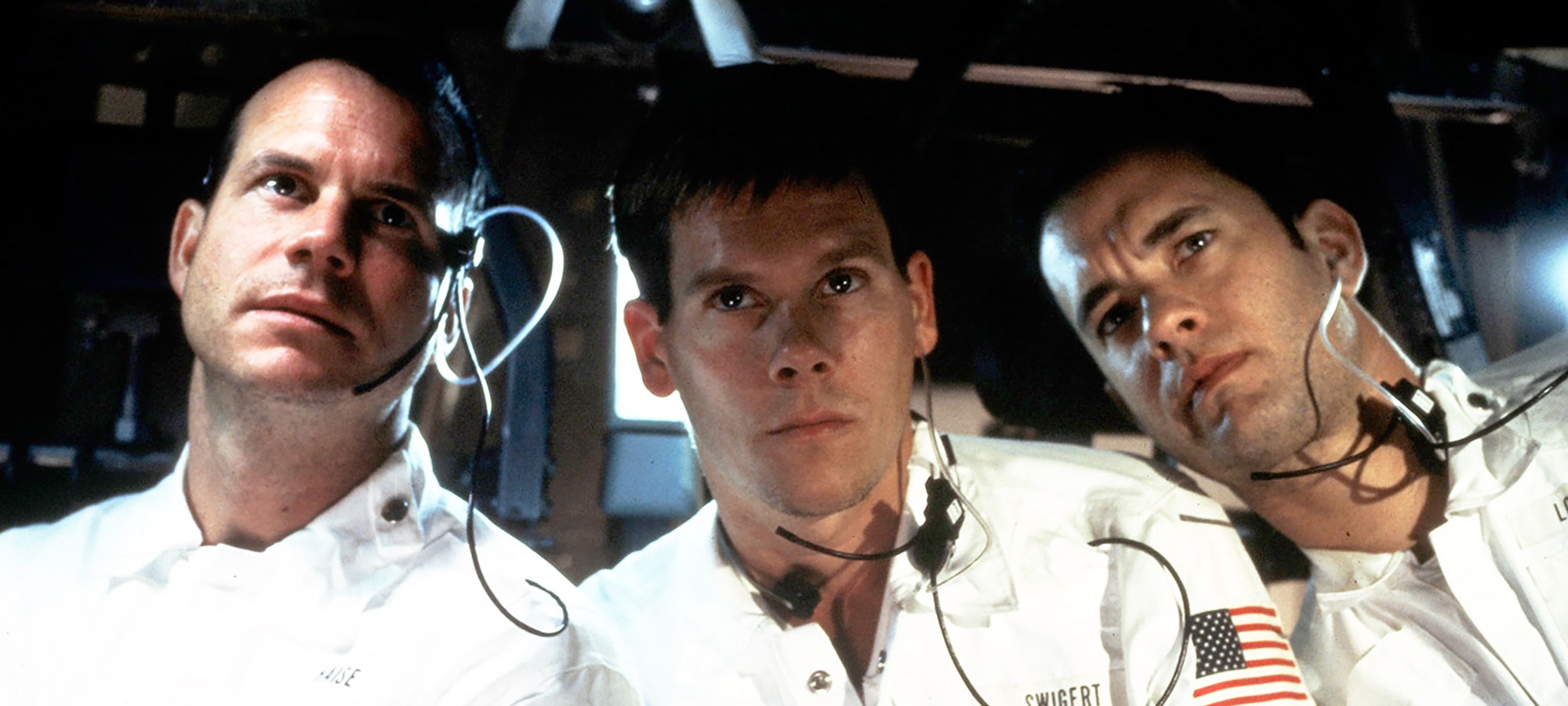
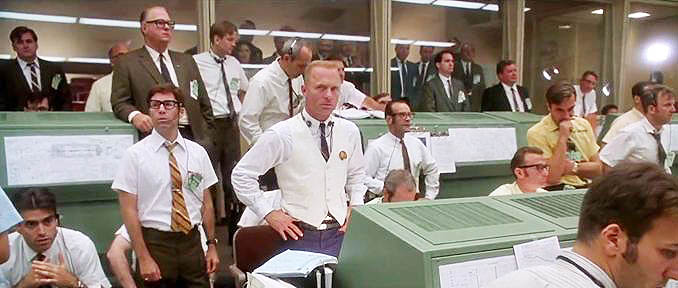
What exactly didn’t you like, Academy voters? Nearly thirty years later, it remains one of the most realistic, tension-filled, non-schmaltzy depictions of American achievement ever put on film. You had Tom Hanks as star-crossed astronaut Jim Lovell, for cripes sake, bringing Kevin Bacon and the late and great Bill Paxton safely back to Earth after a mid-flight oxygen tank explosion with Gary Sinise’s heroic Ken Mattingly springing into action after a no-measles diagnosis to assist from the ground in Houston. You had captivating, unflappable Ed Harris running things in Mission Control, beautifully introduced by Howard a half hour into the film when his signature white vest was handed to him minutes before launch. You even had Ron Howard’s mom playing Lovell’s mom in the assisted living sequence!
More than anything, you had rich, very human characters displaying hope, confusion, fear, and release for its two hours and twenty minutes without one shred of forced emotion or audience manipulation. Everything felt earned. Okay, maybe James Horner’s music swelled at times, but what great American movie doesn’t have that? Even if you know the true account of what happened in those April 1970 days, the details and suspense Howard created is still absolutely riveting. Add to that sharp and impeccable period details (Hanks giving guests a tour early on and lauding they have a brand new computer “that can fit inside one room”) and wonderful actor chemistry (Kathleen Quinlan as Lovell’s brave wife was at least nominated, along with Harris) and again, what more did you want?
There are a host of movie scenes that make me cry on cue: Liam Neeson breaking down at the end of Schindler’s List; the epilogue of Sophie’s Choice; the very end of the Lord of the Rings trilogy when Minas Tirith bows down to the hobbits; when Alan Arkin’s deaf-mute character dies at the end of The Heart is a Lonely Hunter, Atticus Finch sitting up all night with his wounded son at the end of To Kill a Mockingbird. Etcetera.
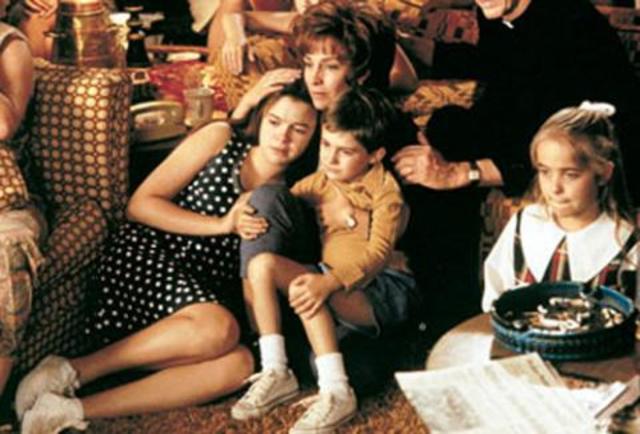
In Apollo 13, the climactic, harrowing minutes of no-contact with the three men during their atmospheric re-entry that’s basically assembled with scotch tape, scissors, and the brilliant minds of the NASA people on the ground is followed by the entire nation’s emotional release when Lovell’s voice is suddenly heard again. That moment is a five-hankie weeper, but watching the movie for maybe the sixth time last week on Netflix, the lump in my throat formed in the very first scene—where the three astronauts and their families gather in living rooms to watch Neil Armstrong’s historic Moon walk (narrated by Walter Cronkite) on television. It truly made me realize how much I love this country—and how much I hate those currently trying to dismantle everything good about it for sinister reasons.
Los Angeles is the most misunderstood major city in America—probably because it isn’t really a city. It’s a sprawling amalgamation of neighborhoods, each with its own character, its own history, its own feel. You can have lunch in Chinatown, drive a few blocks and find yourself in a teeming downtown jewelry district or skid row. People who have never been here love to hate on the place, branding it as merely a haven for rich movie stars. That was not true in the 1930s and it isn’t true now. Less than 5% of L.A. residents work in the entertainment industry, and most of the ones who do are dedicated craftspeople and laborers.
Yet it’s been impossible to shake the stereotype. Watch any national sporting event that takes place here and at a commercial break you’ll either see a shot of the Hollywood sign, the Beverly Hills sign, or roller skaters and body builders on Venice Beach. One of the more sickening aspects of the current wildfires are the social media posts that focus on the lost Palisades homes of celebrities. Why not show the lost homes of working class residents of Altadena, who lack the finances and likely the insurance to ever rebuild anywhere?
I won’t even lower myself to mention the hateful comments by MAGA asshats who glory in others’ misery and have tried to blame the fires on everything from DEI hires to socialism. Climate change—specifically a fire hurricane with 98 mph wind gusts—caused the events and made them nearly impossible to combat.
Thankfully, I live down in Culver City, a good half hour drive from the Palisades, so smoky air has been our main concern. Seemingly though, everyone we know has a friend or family member who lost a home this week. An all-encompassing shared sadness has permeated the region, and put everyone on edge with evacuation bags ready by the door.
My sadness has more to do with the loss of so many L.A. landmarks and neighborhoods we took for granted. Pacific Palisades was perhaps the most precious area of the city, beautiful homes and a charming village sloping toward the ocean. It now looks like Dresden, and the damage didn’t stop there. On the Pacific Coast Highway, every Malibu home perched on the water is now rubble, as are eating institutions like the Reel Inn, Moonshadows, and Gladstone’s. For God’s sake, the Will Rogers house in Will Rogers Park, where we first taught our boy to walk, is history.
Natural calamities have always been part of the landscape here. Months after I arrived in late 1982, a number of those same Malibu homes fell into the sea during a winter storm. The 1994 Northridge earthquake took months to psychologically recover from. I distinctly remember one late summer when Santa Monica residents gathered on the cliffs to watch fires up the coast, like Washingtonians did with the Battle of Manassas.
A few years ago I published a trilogy of creepy Los Angeles stories called Red Jacarandas, but the horror of these fires vastly outweighs those scares. L.A. tends to recover from every disaster it experiences, but for the thousands of unfortunate souls who lost their possessions this time, it may be a long time coming. All I know is that this disaster has made me love and care about Los Angeles even more.
I’m old enough to remember how simple it used to be to attend a sporting event. Pick the game, go to the box office, buy the tickets, return to the stadium on Game Day, pay a nominal parking fee, walk up to the gate, have your ticket torn and head straight to your seat.
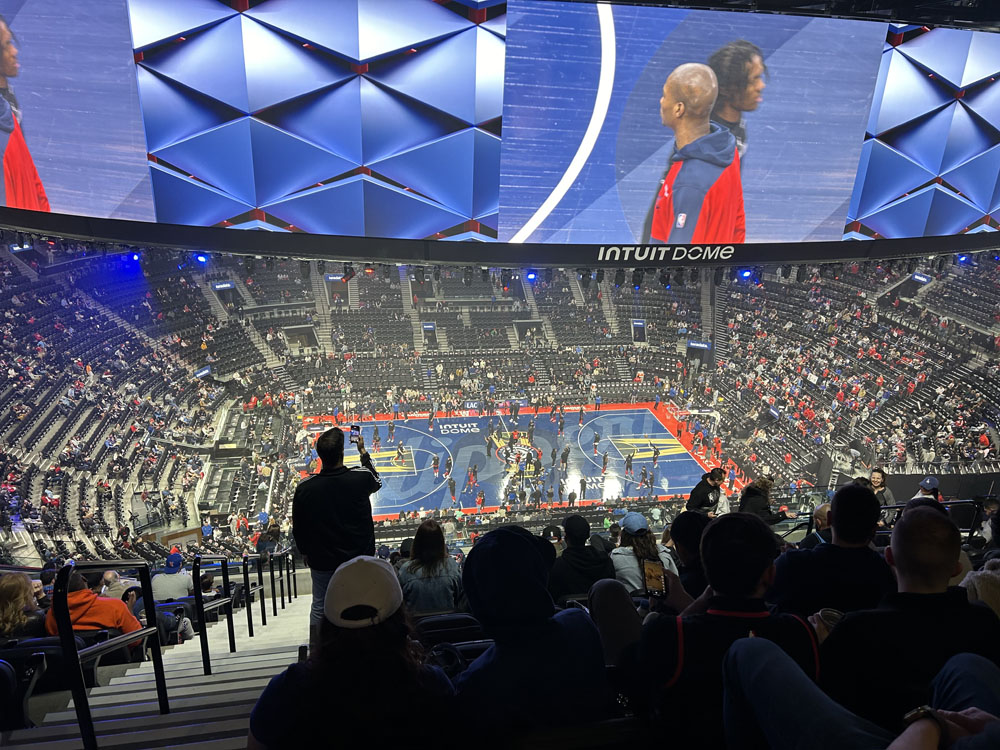
Now, here is the process for attending an L.A. Clippers game at the brand new Inuit Dome in Inglewood. Wanting to buy tickets for me and my son, I first had to download the Intuit Dome app on my phone. Then I had to type in all my personal information and take a selfie for “Face ID”. Then because you don’t enter the arena with an actual ticket, my son had to download the same app on his phone (good that he has one, right?) so I could then “assign a ticket” to him. He gets a text for this, accepts the assignment—though not until he enters all of his personal information and takes a Face ID photo.
Then there’s the parking situation. Outside of the arena, there is nothing safe or available on the street, and the cheapest garage ticket I could find was $42. Okay fine, but this is done through Vivid Seats, and a separate app that needed to be on my phone. Apparently I had Vivid on my phone at another time, but seeing it was probably a decade ago, I had forgotten my password. After being unable to change my password because the type windows were “yellowed out”, and calling the useless Vivid Seats “help line” of robots, I finally logged in using Facebook—which gave Vivid Seats all of my Facebook information to do whatever they want with.
Then in a few hours, a fellow with a name I didn’t recognize texted me from Vivid Seats, saying he was assigning my parking pass to me and I needed to accept it.
So ninety minutes later, we had our tickets and parking pass and I vowed to never attend another sporting event at the Intuit Dome.
* * *
Then we went to the game on Tuesday. Getting there was a breeze on the 405, given that it was rush hour. I showed the parking ticket on my phone and zipped right in to a wide, nicely lit space I was even able to back into.
We walked five minutes up ramps, over a bridge and up to the Intuit Dome entrance. Following a sign for “Face ID Entry, we were twenty yards from the door when two chirpy arena workers in red windbreakers and toting pads looked up at us and said “Welcome Jeff and Jake!” It was Minority Report come to life, and I even high-fived the guy.
Up the tallest escalator west of the Rockies, we entered the top seating area, which had a perfect view of the court below due to the extreme vertical design of the place. Directly in front of us was a wraparound video screen and scoreboard that put most Imax screens to shame. Whenever a Clipper scored, his image appeared with a 3-D finger wag. Like most modern stadiums, the music and cheerleader appearances were way too loud, but it was impossible to miss any play on the court—which were instantly replayed on the wraparound.
Then there was the other slice of The Twilight Zone: food ordering. Completely cashless, you walk up to one of the many “Pick and Roll” eateries, step in front of a kiosk, which reads “Hello Jeff” and you enter the gate. Pick out your $7 can of Coke Zero and $7 chip bag and just walk back out because your Intuit app, with your pay method already entered, bizarrely knows what you’ve taken off the shelf.
Getting out of the garage was an additional breeze after the game, and I came away somewhat mixed. Despite the Kafka-esque ordeal setting up my phone for the place, the Intuit Dome was such a weird, futuristic departure from past game experiences it was oddly comforting—like being trapped inside a role-playing video game—and will be far easier next time. Assuming I go.
This Thursday October 3rd, direct from the offices of Grassy Gutter Press, the independent publisher of all seven of my novels, I’ll be reading a short selection from THE PORCH ROOF CLASSIC, my semi-autobiographical coming-of-age tale set in a small Western Massachusetts town in 1970. The three video readings, running on three consecutive Thursdays, can be viewed on Facebook, YouTube, TikTok and will be linked on this page that day.
It’s long been sage advice to “write what you know”, and it was fun to weave a number of my adolescent memories into the story of Joey Tosh, a bullied 14-year-old who with the help of a new female friend, spends the summer growing the guts to fight back by challenging his nemesis to a no-holds-barred Wiffle ball game. Five esteemed published authors have already praised the book, and many who enjoyed my recent podcast version can now order the slightly revised, limited print edition here.
I won’t deny it: My novels are on the quirky side, and do not easily fit into predetermined market categories agents and mainstream publishers tend to look for. It’s the main reason (other than my innate impatience) why I’ve continued to launch my books independently. Marketing your own stuff ain’t easy, and last night I had to delete the Grassy Gutter Press Facebook page I created years ago after discovering that a tsunami of disinformation trolls, ads, and random postings from non-members had taken over my “news feed” there.
After sending out numerous unsuccessful queries for The Porch Roof Classic, I did manage to get itinto the hands of a reputable New York agent who had shopped around an earlier novel of mine decades earlier. One week later, he sent me a nice rejection letter that said “I wouldn’t know how to best position this in today’s marketplace.” Stories featuring “underrepresented voices” on a personal journey, usually diverse women or LGBTQ characters, have been the book industry rage for years, particularly in the perceived “young adult” category. To paraphrase Seinfeld, not that’s there’s anything wrong with those, but I just happen to be an older white guy with a story that ANYONE who grew up in the 1970s can relate to, especially longtime baseball fans, and felt it was more important to design the book myself, talk my talented illustrator friend Jennifer Field into doing the cover, and get the thing out there the quickest way I could to let the readers decide.
So if you need an enjoyable, nostalgic escape—and who doesn’t?—from the current toxic news cycles and dark forces creeping over our world, check out the comic innocence of THE PORCH ROOF CLASSIC!*
*By the way, the sequel will be the book that agent shopped around back in 2007—as soon as I rewrite it and make it even better.
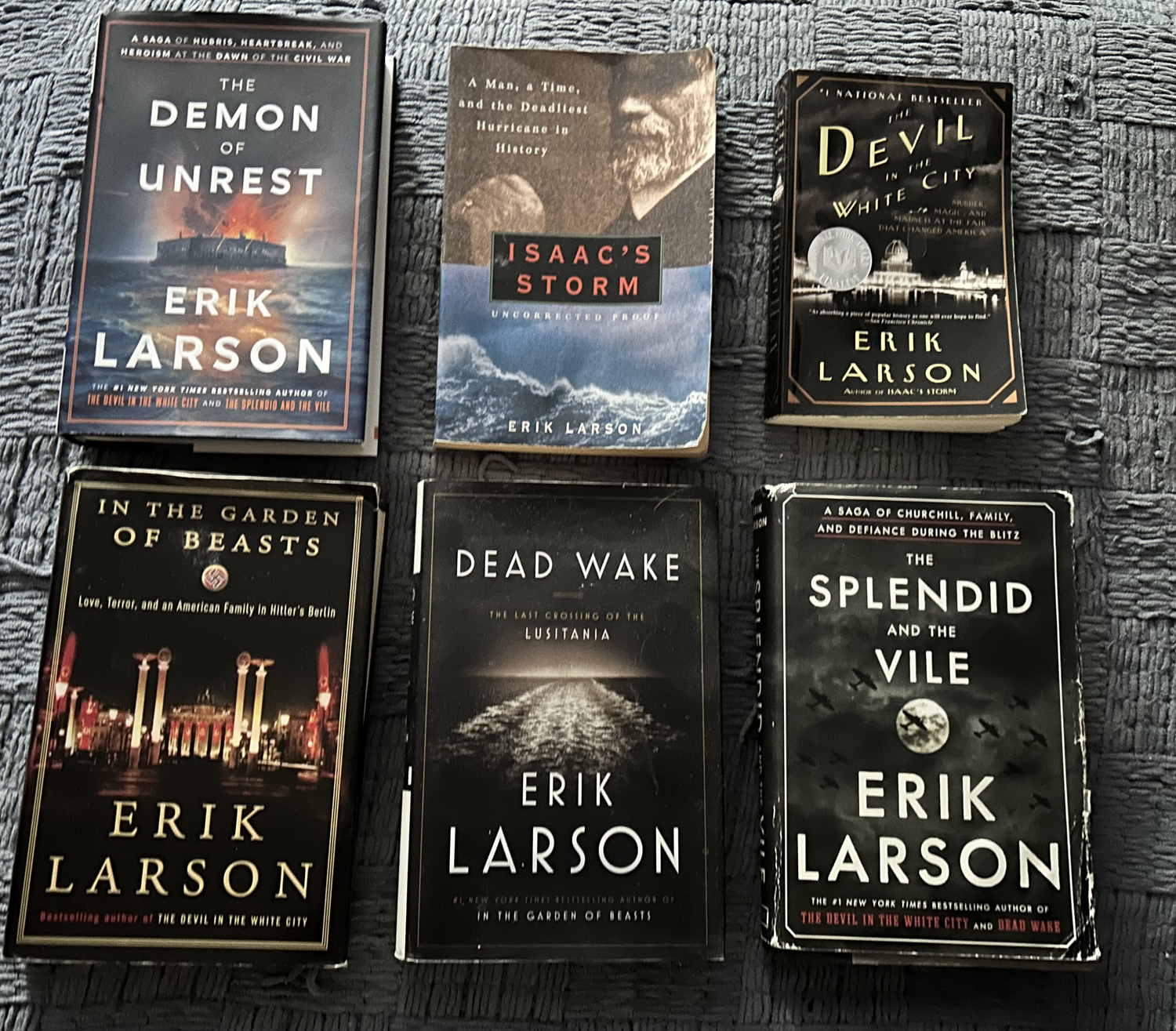
Paying more attention to American history these days than I ever have, I thought it was high time I paid tribute to the author I feel is our greatest non-fiction writer. While Ken Burns may wear the crown of this country’s most accomplished documentarian, Erik Larson has now released his eighth and certainly timeliest book, The Demon of Unrest, a riveting account of the months, days and minutes leading up to the 1861 attack on Fort Sumter that sparked the Civil War. Like everything he’s written since the turn of this new century, it has the two classic Larson qualities: deep, impeccable research, and a masterful page-turning narrative that drops the reader straight into a fascinating historical event.
The Devil in the White City, his addictive blend of the horrible and wonderful sides of mankind—a serial killer terrorizing the city during the 1893 Chicago World’s Fair—was the first Larson book I read, and it quickly got me pining for his previous book and his subsequent four. Every single one is a gem:
ISAAC’S STORM (1999)
Devastating account of the Galveston Hurricane of 1900, and Isaac Cline, the resident meteorologist at the U.S. Weather Bureau who struggled to warn people of the approaching storm.
THUNDERSTRUCK (2006)
Perhaps an attempt to recapture the odd magic of The Devil in the White City, this was the one Larson book that didn’t dazzle me—though interweaving an English murderer named Hawley Crippen with Guglielmo Marconi, creator of the radio on a chase over the North Atlantic ocean, it’s still an entertaining yarn.
IN THE GARDEN OF BEASTS (2011)
Chilling account of William Dodd, our first Ambassador to Nazi Germany, who moved to Berlin in 1933 with his family and was present as the fascist poison began to infiltrate everything and everyone in the city.
DEAD WAKE (2015)
Best book on the sinking of the Lusitania in 1915, with marvelous details on the passengers, the crew, and the German submarine commander who did the sinking.
THE SPLENDID AND THE VILE (2020)
An incredible portrait of Winston Churchill, set in the year after he was elected Prime Minister and implored his country to be fearless while English cities were being bombed by Nazi planes.
And now we have The Demon of Unrest, a book Larson was just beginning to research when the January 6th insurrection happened. If anything, it became an ironic mirror to the new tale he was telling. The book hops between Washington and Charleston Harbor with breathless momentum, painting rich portraits of both the abolitionists and planters who were on a fateful collision course. His depictions of the Charleston waterfront, with excited Southern gentlemen and ladies pre-celebrating the attack while enslaved men prepare the forts, is disturbing and amazing. He even spends three pages describing the cumbersome procedure it takes to fire a cannon back then:
On the gunner’s command From Battery! the men used long, heavy poles of wood, or handspikes, to back the gun away from the embrasure. The gunner guided the process by repeating the command Heave! The cannoneers positioned their spikes at various points under the gun carriage and levered the gun far enough away to allow access to its muzzle.
When I finished the book (which ends with a very un-Larson like moment), I immediately Googled the man to make sure I had actually read all of his great books. As it turns out, I hadn’t! His first release in 1992, The Naked Consumer, explores all the ways direct marketing companies and the government spy on us, while 1995’s Lethal Passage also looks incredible: tracing the story of a gun involved in a 1998 high school shooting that illuminates our diseased gun culture.
NOTE: I tend to only post here when something or someone inspires me. That said, this is the first time I’ve ever posted about the same person twice…
Walking along the banks of an idyllic creek in Dean’s Village, a charming fairy tale enclave in Edinburgh’s West End, Taylor Swift’s luminous voice suddenly wafts through the leafy trees and stops me and my wife in our tracks.
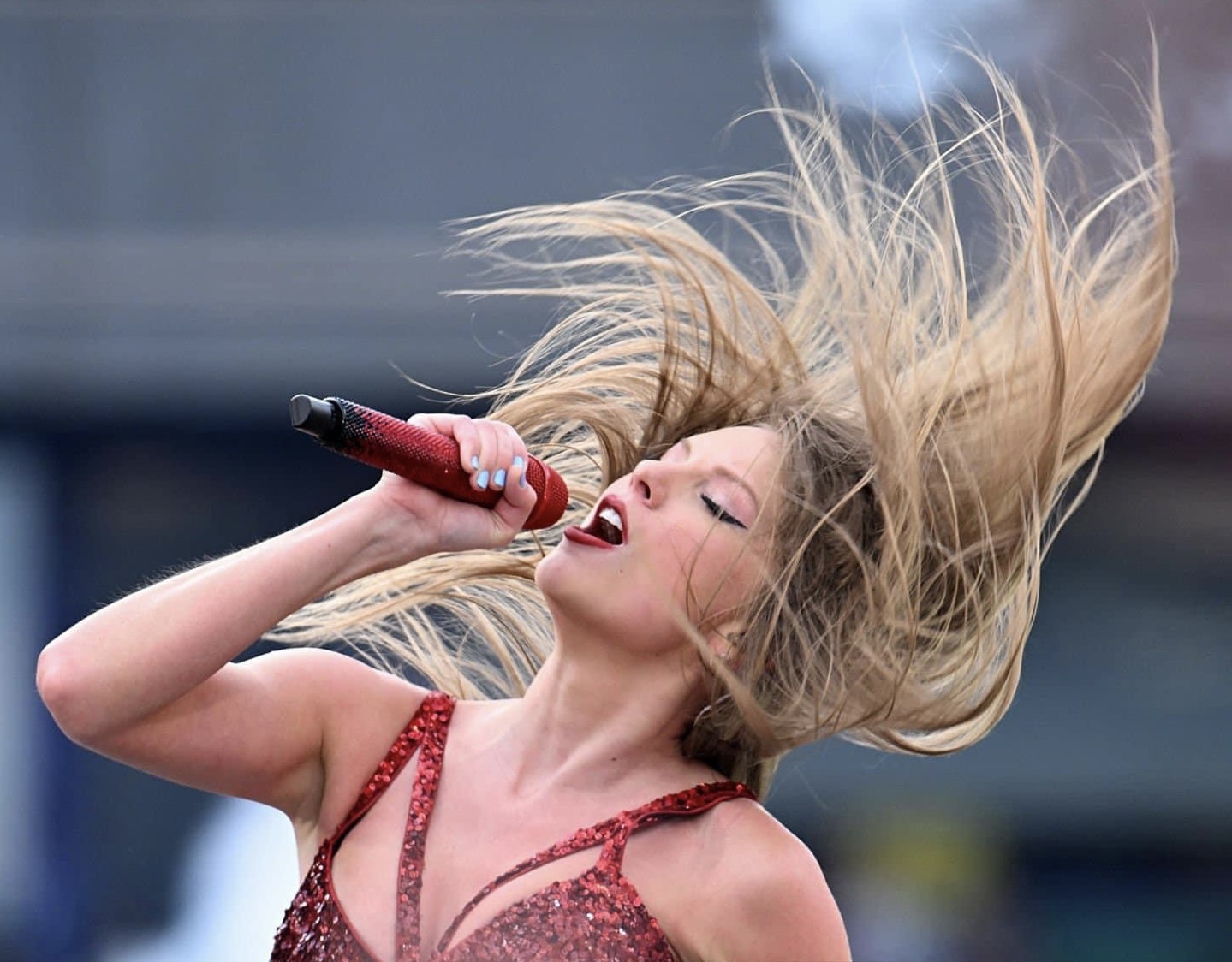
The song is “All Too Well”—her 10-minute version—and as it builds to one of its heartfelt choruses, the roar of over 73,000 fans singing along with her follows in an echoing crescendo that practically ripples the water.
The otherworldly moment seems especially fitting. When we booked our week and a half vacation to Scotland, my wife and I had no idea Taylor Swift would be launching her UK Eras Tour and playing Murrayfield Stadium in Edinburgh all three nights we were in town. Both of us had become ardent fans—me as recent as February—but had no plans to attend any of the shows. We’d already watched her three and a half hour concert film, and mining the Internet for tickets to stand in a packed crowd in cold wind and possible drizzle just wasn’t appealing to us.
Yet this turned out to be a blessing in disguise. Because it allowed us to experience the happy, infectious Swiftian culture that permeates every city she plays in, it felt like we did attend. Swifties of every size, shape, age, and gender were absolutely everywhere, many garbed in sparkly short skirts, tall white boots and homemade ensembles representing various phases in Taylor’s career. (An eleven-year-old boy with blue tinted hair wore a T-shirt that read I LOVE MY ERA.)
At the airport in Boston where we had changed planes, a dad waited to board with his exuberant three daughters wearing a Travis Kelce Chiefs jersey. On the morning tram coming into town that snaked past the stadium, hundreds of fans were queued up in the wind and rain 12 hours before the concert to buy merchandise. Later, up and down Princes Street, where street vendors hawked pink cowboy hats and matching feathered boas for ten pounds apiece, concertgoers stuffed themselves onto special stadium-bound trams for hours.
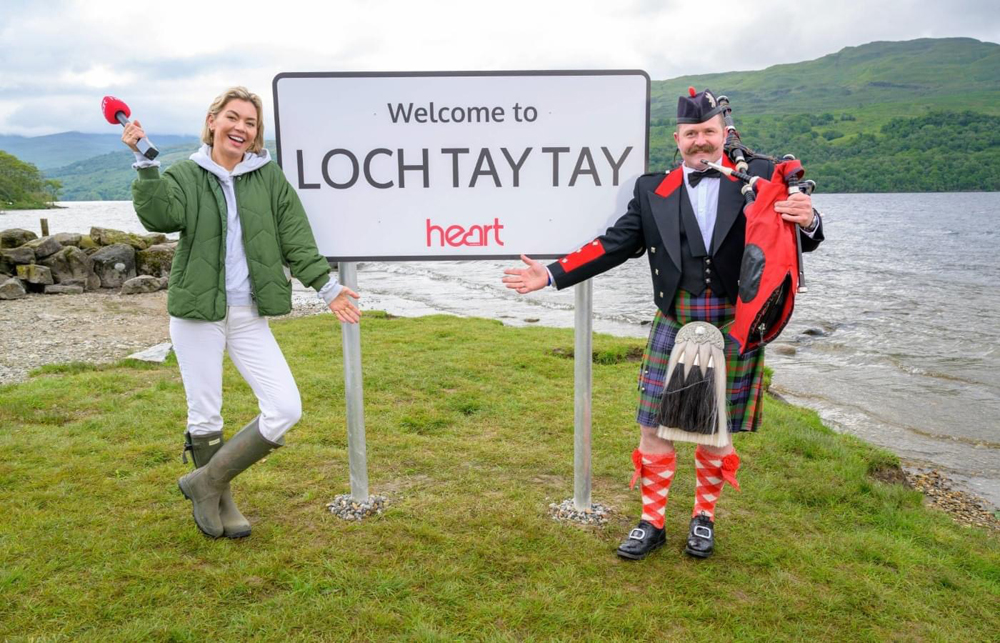
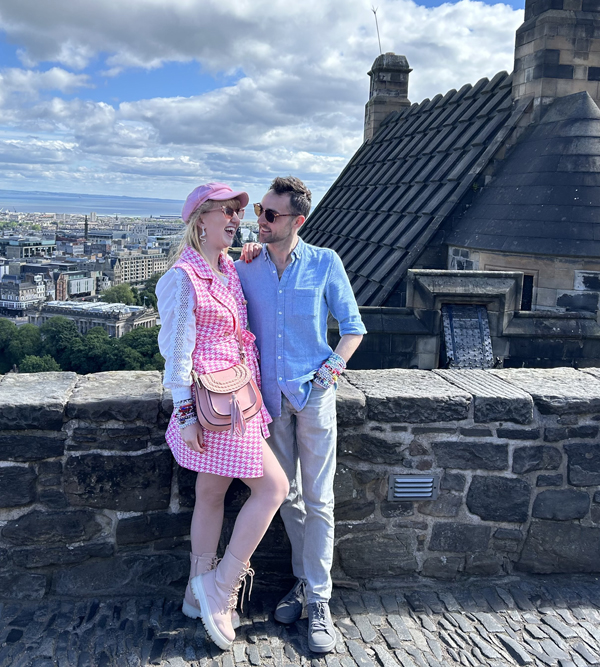
The British press, with concerts in Liverpool, Cardiff and London to follow, were draped all over her like magical capes. Loch Tay in the Scottish Highlands was renamed Loch Tay Tay for the week. One of the couples that got engaged at the Friday show was seen posing for photos on the ramparts of Edinburgh Castle the next afternoon, where they mingled with Swifties from Italy and Spain in Eras Tour sweatshirts.
Best of all, we met wonderful fans sitting beside us at numerous restaurants. A mother in her 40s with two kids had been encouraged to fly there alone from Houston by her husband to see Taylor again because “she loves me. When she sings a song, it feels as if she loves me.” Amy and Alex, girlfriends in their 20s from London, had seen her the previous night and agreed it was one of the best experiences of their lives, astonished that over 70,000 people in the stadium “knew practically every word of each song .” Another young woman from Nashville we met on a street corner had shelled out $1,800 per ticket to see Taylor in the U.S., and was in town to see her again with her Welsh boyfriend at a fraction of the cost. Edinburgh is rich in art, history, food and drink, and remarkable in every way, and Swift’s nearby presence catapulted the city into an urban celebration.
There’s a pretty simple reason why Swift is a global phenomenon, and her unfailing honesty, crack stage performances, and fetching looks are only a few of them. I pay zero attention to her monetary success and dating history; my obsession is with her music. She rarely repeats a line, makes lyrical use of every bridge, assembles little sonic stories that are easy to sing along with and never leave your head or heart, often beautifully building before ending with a sudden poof—an emotional mic drop.As that mother from Houston expressed so clearly, her songs have a way of personally connecting with the listener like no popular artist ever has—not even the Beatles.
With a cabal of evil forces threatening the world right now, the mass joy that Taylor Swift produces feels absolutely necessary. She is an empowering, inclusive role model for countless people, an undisputed force for all that is good. You’ll never catch me donning a furry cowboy hat or one of those Chiclet-style friendship bracelets, but I may have her music on my earbuds and in my car for quite some time.
After seeing my original 39-song “Taylist” swell to 73 songs with her just-released album and added recommendations from friends, I’ve since pared that down to a new collection of 30 favorite tracks, an excellent starter set for those who have yet to indulge. May I now present…Taylor Swifter:
1. All Too Well —The 10-minute acoustic version is a work of art, this shorter, louder one is merely sensational. And you call me up again Just to break me like a promise So casually cruel in the name of being honest
2. State of Grace —surprising propulsive rocker that proves she can also kick some hard ass
3. Fearless
4. Cowboy Like Me —gorgeous ballad with patented Swiftian imagery Now you hang from my lips like the Gardens of Babylon With your boots beneath my bed, forever is the sweetest con
5. Hey Stephen —delicious, catchy gem I came across a few weeks ago. Seamlessly rhymes Stephen with “deceivin”, “feelin”, “leavin” and “fifty reasons”
6. But Daddy I Love Him —dynamic rock track from her new album God save the most judgmental creeps Who say they want what’s best for me Sanctimoniously performing soliloquies I’ll never see
7. Anti-Hero
8. The Man —superb female empowerment anthem and live showstopper
9. All You Had To Do Was Stay
10. Betty (thanks for the tip, Lindsey R.)
11. Holy Ground —another good rocker from her Red album
12. The Best Day
13. Invisible String
14. Clean
15. Paper Rings —wonderful pop (thanks for the tip, Jason T.)
16. Right Where You Left Me —sad and lovely, and best example of her knack for perfectly stringing lyrical ribbons together with music to channel the tune right through you
17. The Last Great American Dynasty
18. Karma
19. Forever and Always
20. Style —a near-Madonna tribute
21. Lover —sweet slow dance we also heard through those Dean’s Village trees
22. Today Was a Fairytale
23. ’Tis the Damn Season (thanx again, Lindsey R.)
24. Long Live (thanks for the tip, Debbie B.)
25. Cruel Summer —Eras Tour opener that instantly hooks her audience
26. You Belong With Me
27. Starlight —yet another great underrated rocker
28. We Are Never Ever Getting Back Together —my second favorite, a funny, addictive breakup anthem best seen live
29. Getaway Car —My favorite Swift song has everything: compelling story, tangible imagery, and killer lyrics all set to fabulous, driving music. It was the best of time, the worst of crimes I struck a match and blew your mind We were ridin’, in a getaway car There were sirens, in the beat of your heart
30. Marjorie —A universal, deeply felt coda about loss of a loved one, the most hauntingly beautiful song I’ve ever heard
The Internet can be a maddening, toxic place at times, but there are plenty of safe, relaxing spaces on YouTube to escape to—or as I like to put it, floss your teeth to. The second post I made on this blog site nine years ago was about my addiction to the hypnotic, front-seat train ride videos of Europe, and I have since added the perfectly filmed plane rides of Skylite Productions to this floss-worthy festival.
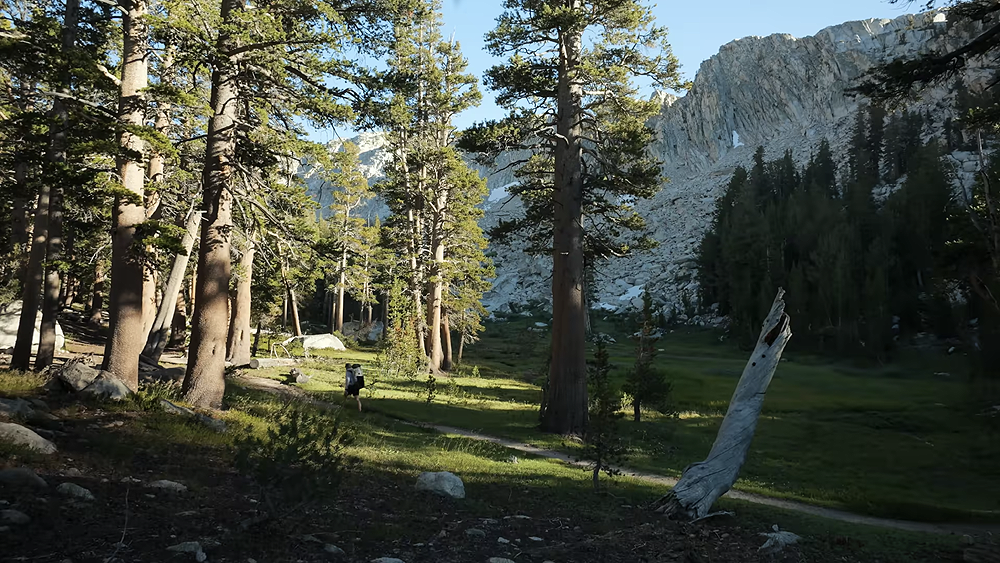
Then a few months ago, I came across the extraordinary one-man, “silent hiking” videos of Harmen Hoek, and trust me, they blow away any short travel films you will ever watch. Hoek, a former physicist from the Netherlands, assembles beyond-gorgeous footage—often using staggering drone views—shot in numerous amazing places—the Himalayas, the Dolomites, the Balkans, the Pyrenees, the Wadi Rum Desert, the Grand Canyon, Yosemite backcountry, and even Iceland (where he camped by an active volcano). And that’s just for starters. Each video runs between 25 and 45 minutes and is put to soothing, unobtrusive music from a subscription service called Musicbed. Hoek’s camera shots are long enough to savor the natural beauty yet clipped enough to keep each journey fresh. Without one word of narration and plenty of natural sound, they seat you on a peaceful earth train and just pull you along.
When I ask him if he takes a camera operator with him on his hikes, Hoek says “Everything you see is recorded by me. No one has ever touched my camera during a hike.” My only response to that is: Holy. Crap. Meaning in addition to having an incredible eye for nature’s beauty, Hoek is also a drone master; many shots float from thousands of feet up, his hiking figure just visible below on the trail.
Each video includes a few signature Hoek habits, like fondly patting direction signs he walks by, or making morning coffee and healthy meals over the same little gas burner. Everything is shot in pristine high-definition, and when you fill your computer screen, you really feel like you’re joining him on the hike.
Hoek tells me his personal favorite video so far is of the 21 days spent on the John Muir Trail (at an hour and eleven minutes, it’s his lone “epic”), due to his love for the Sierras, and he has plans to do some hiking this summer in Banff and elsewhere in the Pacific Northwest. His work is truly an Internet gift; when life gets too crazy and stressful, Hoek is more than happy to immerse you in his Great Outdoors.










 Jeff Polman