A Lost Bus Worth Finding

One Battle After Another remains my favorite movie of the year. Nouvelle Vague, Richard Linklater’s superb black and white love letter to the French New Wave, is my second favorite. And now I have a third…

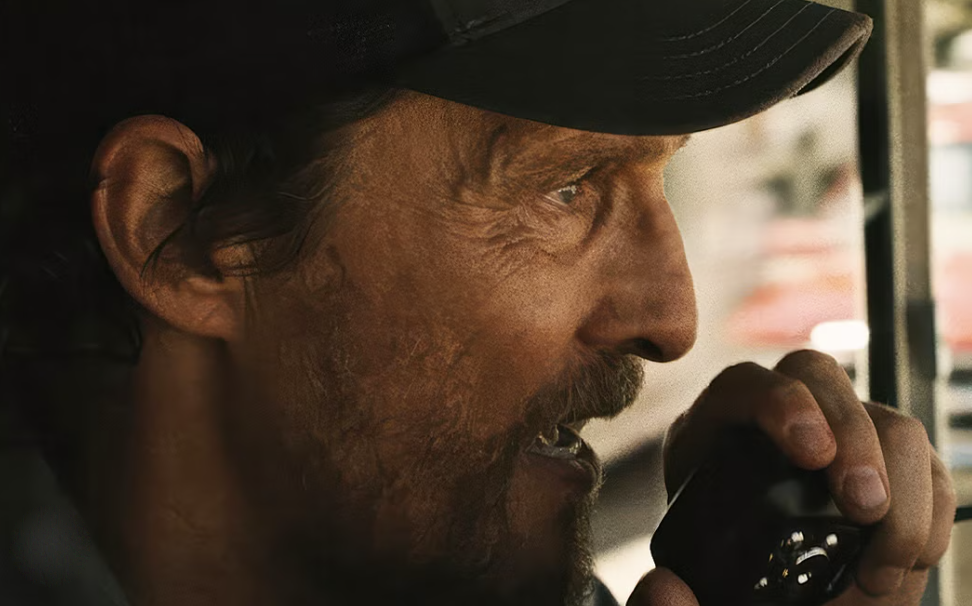
The Lost Bus is an Apple Original by Paul Greengrass, who directed the equally amazing, far too unheralded United 93 back in 2006 about the September 11th plane, and the same description of that movie can be said about this one: They are thrillers that actually thrill.

As a “fire movie”, it’s better than The Towering Inferno, Backdraft, or any other attempt at the genre I’ve seen. Greengrass’ signature style is a clipped, handheld realism and bevy of unknown actors to give the film a pronounced documentary feel that is wall-to-wall engaging. Kevin McKay’s courageous rescue of a busload of school kids during the tragic Paradise, CA fire also comes with the best Matthew McConaughey role he’s had in years. A no-nonsense, down-on-his luck working guy at odds with his bus dispatcher boss and estranged, high-maintenance family, McKay finds redemption when the wildfire spreads so fast he’s the only driver left in the fleet who can take the job. McConaughey’s desperate optimism and fear drive him to heroics, but there are no cliches here, none of the drama is forced, and the emotional release in the film’s final act feels absolutely earned.

It’s shocking that McConaughey didn’t receive a Best Actor nomination for this, and even more shocking the film received only one—for special effects. As a study in working class people and the nearly impossible tasks done by first responders, it’s a marvel, and the action builds and builds and never lets up. I imagine Greengrass used actual Paradise fire footage here and there, but if he did, it’s practically seamless. The Lost Bus is a realistic white-knuckle ride, and reminds us what good, moral humans are capable of every day.

Currently, My Favorite Show on Television

I have a very odd relationship with The White Lotus. I was hooked on the first season of HBO’s non-flinching study of entitled, flawed travelers in remote locations until hotel manager and Emmy-winner Murray Bartlett took an actual dump in a guest’s suitcase in the season finale—an act so gross and unnecessary to put on screen that it turned me off from the entire series for many months. I refused to begin watching Season Two until I started hearing great things about it, and once I gave in, was blown away by its story, characters, humor, intrigue and Sicilian locations. 

Now that I’m finally up to date on Season Three, it’s become clear what makes Mike White’s series so enjoyably addicting—and what ultimately drew me back into its fold. Namely, everything: superb writing, acting, direction, cinematography, and musical score—a seductive, almost sensual immersion into the remote “paradises” these people have traveled to. We become observers of human behavior at its best and worst, and study the emotional and spiritual journeys these people are on. Because some of them are scoundrels and jerks, we don’t always like them, but their warring qualities and interactions are so beautifully constructed that it’s fascinating to just watch the results.

Season Three, without giving away much of the plot, is set in an exclusive jungle resort on the shores of Thailand, and it’s by far the most engaging and harrowing White Lotus world we’ve encountered.  It is also a stunning meditation on Buddhism, particularly on its non-violent beliefs, and how the characters react to the all-encompassing Buddhist vibe of their “wellness resort” tells you everything about who they are.

Every actor in the cast is fabulous, and it’s largely because their characters are so multi-dimensional and interesting. Jason Isaacs and the amazing Parker Posey play a wealthy North Carolina couple with two sons and a daughter who went there so their daughter Piper could work on a religion thesis. Carrie Coon, Leslie Bibb, and Michelle Monaghan are three women who have been friends for years, each with their own personal baggage and unspoken resentments that seem to be on a collision course.

Best of all for me are Walton Goggins and Aimie Lou Wood, as Rick and Chelsea. Rick, a walking time bomb of bitterness, is there on a troubling mission you learn about after a few episodes, and is a perfect foil for Chelsea, a free-spirited English girl from Manchester who stays with Rick just because she thinks she can ease his pain; the wellness center clearly isn’t doing it. Goggins, who was darkly fabulous as the chief villain on Justified and the killer cowboy robot on Fallout, is beyond belief here, a smoldering cauldron of deep hurt that rivals early Brando, with deliveries like classic Jack Nicholson—without the smile.

Every scene in Mike White’s scripts is expertly constructed, with every line of dialogue either emotionally revealing or frustratingly bottled up. Sam Rockwell arrives in the sixth episode and has a monologue so unforgettable it even makes Walton Goggins speechless. Add to that the hypnotic, Thai-flavored musical score by Cristobal Tapia de Veer and Ben Kutchins cinematography that completely puts you in their tropical world, and you are in no hurry to leave it. I have no idea how the final episodes of this third season will play out, but I’ll sure be glued to my screen when they do.