On Being Bookish

I weep whenever I hear of a book store closing. Living in Los Angeles, then, I weep a lot, and also grind my teeth quite often when I see a fantastic spot for a book store (like downtown Culver City) and one just won’t materialize there. Thankfully, though, public libraries tend not to be on the endangered species list.

Growing up, reading was a privilege and books were precious jewels. Devouring the great Classics illustrated comic series led me straight into novels, and then it was on to the local library. Back in Longmeadow, Mass. half a century ago, we had two completely different venues for this, each of them enchanting in their own way.

OLYMPUS DIGITAL CAMERA

Richard Salter Storrs was a famous clergyman who was born in Longmeadow in 1787, and the Storrs Library on tree-shrouded Longmeadow Street was built on the site of his former house in 1932 and named for him. To an impressionable young fan of Roger Corman’s Edgar Allan Poe movies in the early ’60s, the ancient library felt like walking into my own private House of Usher. Luxurious, hushed rooms, spooky paintings on the walls that always seemed to be watching you while you browsed the shelves, and a clammy kid’s section down a long flight of steps that was only missing a cask of Amontillado provided ample sanctuary on a wintry late afternoon. At the time, it also had a very stuffy staff and strange hours, but the place treasured books in a serious and profound way that certainly rubbed off on me.

imagesThen there was the little green bookmobile, which wondrously stopped at the suburban development corner in front of our house. I can’t seem to recall how often the contraption rolled by, but I imagine it wasn’t too often, because every time it did was an event. Neighborhood kids queued up by the dozens to climb inside, and an elbow in your eye was a small price to pay for checking out another Hardy Boys volume or Duane Decker Blue Sox baseball novel. Our house had a screened-in backyard porch, and during the long summer, kicking back on our plastic-cushioned lounge furniture with the new acquisitions was one of our favorite pastimes.

johnson%27s+bookstore+at+rigthtcroppedIf the libraries didn’t satiate us, there was always Johnson’s Bookstore in downtown Springfield, the Powell’s of Western Mass. Not nearly as big as that Portland, OR mecca, it was nevertheless a local institution. Its owner, a thin, taciturn older man in a suit who I  assumed was a descendant of the original Johnson family, never failed to be leaning against a center display with his arms folded when you walked in the front door, directing customers to the proper section, eyeing hot-fingered kids, and surveying his literary realm like Nero from his upper box at the Colosseum. We never spent much time in that part of Johnson’s, though, because the real prize was out the back door and across an alley to…
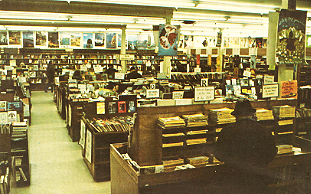
johnson'sJohnson’s Secondhand Bookstore! Two glorious floors of used comic books, sports annuals, and actual literature, a place where my brother and I bought Street & Smith Baseball Yearbooks by the pound, not to mention National Geographic, record albums, and an occasional old copy of Look magazine. And the best thing was that there was far less staff in there, and we were left alone to pore through their musty archives as long as we wanted. Sometimes we’d even remember to go home.

As I grew older, and many of my friends gave up reading for female pursuit, alcohol, and other distractions, I was never without a book in my hands during the summer months. There I was across the river in Agawam in July of 1974, sitting on a yellow bench underneath the Wildcat Roller Coaster I helped operate at Riverside Park. With cars crashing down hills and rattling the metal beams around me, I remained deep inside my fat paperback of The Two Towers, men, elves and Orcs clanging swords in the Battle of Helm’s Deep…
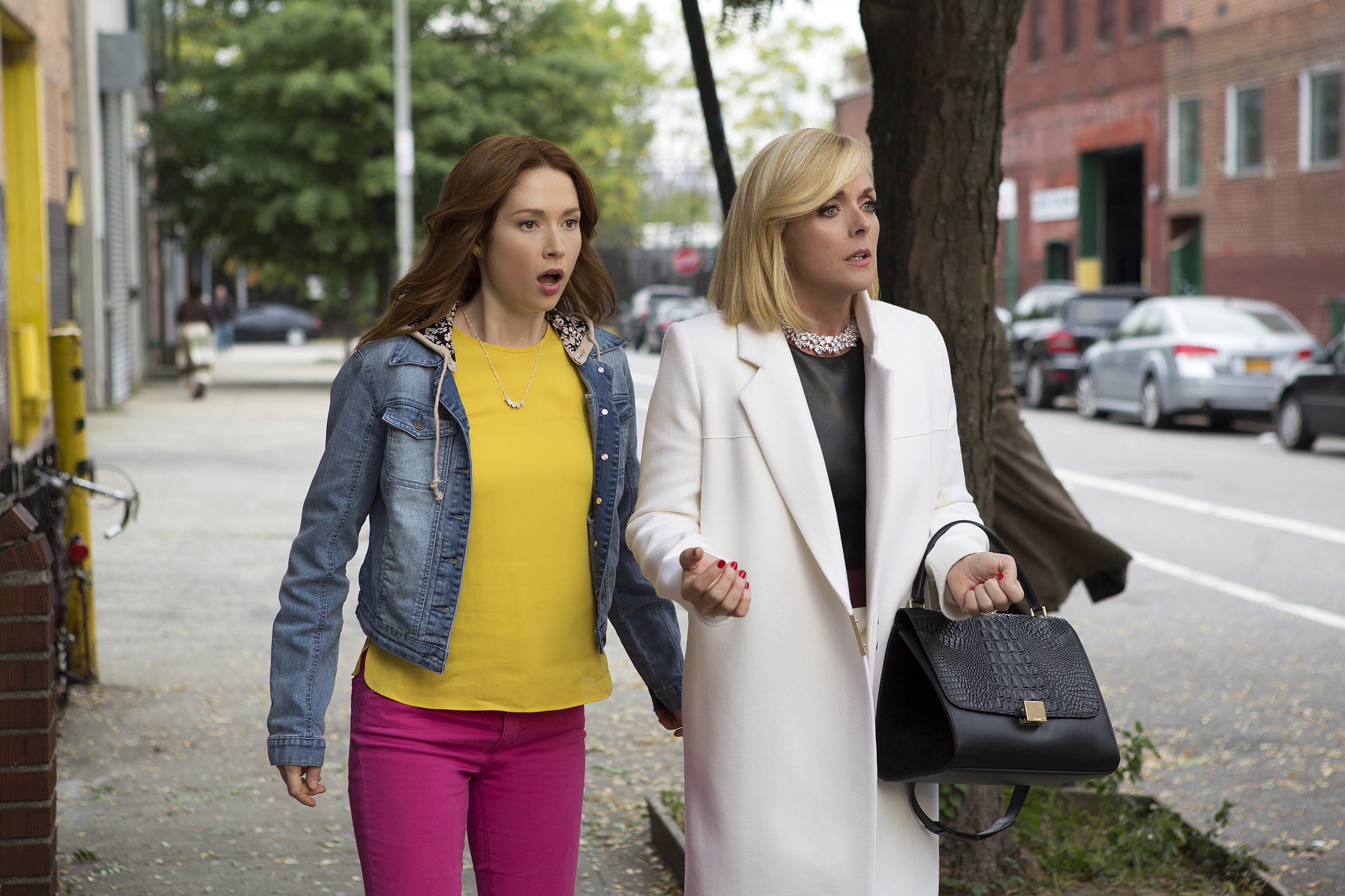
How I Learned to Stop Whining and Love the “Kimmy Schmidt”

872eb9fd_unbre_s1_050_h.xxxlarge_2x

It helps to give almost anything time. A book. A relationship. A slow-cooked rump roast. And it’s often true for a TV series like The Wire, which takes about six hours before you realize you’re watching a filmed version of a modern-day Nicholas Nickleby.

If anything, the first 13 episodes of the new Netflix-bingeworthy series The Unbreakable Kimmy Schmidt were a roller coaster ride for me. Loved the pilot, liked the second episode a little less, and by the sixth or seventh 25-minute escapade in the New York life of one of Indiana’s famous rescued “Mole Women,” I was ready to bail.

Then I took a few weeks off, started watching again, and by the penultimate 12th episode, thought I was witnessing one of the zaniest and most inventive situation comedies ever filmed. Kimmy just has that power to break your misgivings.

For those not in the know yet, the show is about a spunky, understandably naive young redhead named Kimmy who has been imprisoned with three other women in an underground bunker in Durnsville, Indiana for 15 years by an insane (and unseen) preacher named Richard Wayne Gary Wayne. Preacher Wayne told them the apocalypse had happened and there was no reason to go back outside, and who knows what kind of psychological and sexual abuse may have occurred during their captivity.

After being freed, Kimmy travels to New York City for the first time with her fellow “mole women”, decides she digs the place and climbs off the bus to begin a new life. A liberated fish out of water, Kimmy smiles from ear to ear at practically everything, somehow lands herself a low-rent apartment with a furiously gay actor/singer wannabe named Titus, a nanny job with a hideously rich and uptight millionaire’s wife named Jacqueline Voorhees, and non-stop hijinks ensue. Mrs.Voorhees is beyond demanding, and her son and teenage step-daughter are different kinds of monsters. As Kimmy tries to adapt to the modern world, it’s only a matter of time before members of her imprisoned past return to plague her life even more.

The premise is not exactly a laff riot, and despite sharp characters, hysterical dialogue, and a frantic comic pace that co-creator Tina Fey seemed to have airlifted from the earl seasons of 30 Rock, I was having a major problem early on with the show’s tone. Abuse is a very serious problem in our society, and filtering it through a goofy, rapid-fire joke fest seemed wrongheaded and often squirm-inducing. What’s more, the story just seemed to be running in place and recycling the same Kimmy Out of Her Element gags.

Things pick up a bit when Kimmy finds herself in an odd love triangle with an Asian math student named Dong and handsome phony Brit from Connecticut named Logan. One episode later, the trial of Reverend Wayne gets underway in Indiana and the show takes a speed line to a higher level. With Jon Hamm playing the narcissistic, self-defending preacher and Tina Fey going full Marcia Clark as one of the inept prosecuting attorneys, the final three episodes are astoundingly good. For the first time I realized that Kimmy Schmidt was not just a weird 30 Rock knockoff, but a biting satire of our judicial system, carnivorous media, self-absorption and religious zealotry, all wrapped up in one beautifully acted, written, photographed and directed package. I was also wrong about the brand of humor; without one wasted joke-free moment, it’s actually closer to a Zucker Brothers movie than it is to 30 Rock.

Ellie Kemper as Kimmy is a career-making role. As the spunky, naive redhead receptionist on NBC’s The Office, she was one of my favorite characters in the last few seasons I was able to endure of that show, and here she’s spot-on perfect, certainly one of the easiest comedy characters to root for in recent memory. Tituss Burgess is way too flamboyant at times, but his sweetness and caring for Kimmy comes through, and some of his later episodes when he travels to the trial with her are some of the season’s funniest moments. As Mrs. Voorhees, Jane Krakowski, who also played 30 Rock‘s insecure actress Jenna Maroney, is an annoying joy, while her daughter Xanthippe (I can’t pronounce it either) is a masterpiece of morose ennui in the hands of Dylan Gelula.

The series has already been renewed for a second season, and after the events of the finale I just saw, it’s hard to tell what direction the tale will now go, but I think it’s safe to say that if you have a spare 325 minutes to binge watch The Unbreakable Kimmy Schmidt, do so. Damn it.

The First Time Ever I Saw Shea’s Face

Shea

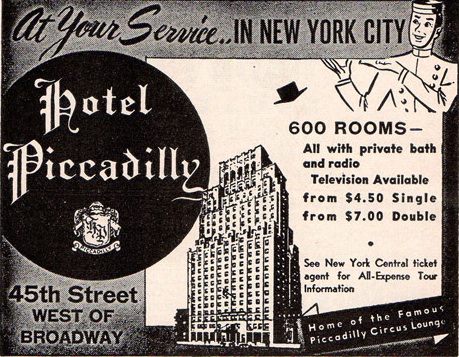
In July of 1964, my parents took my older brother and I to the New York World’s Fair. It was a big trip for us. Most of our family “getaways” involved heading 25 minutes down to Hartford to visit relatives or tooling around the Berkshires on Columbus Day weekend for an afternoon of leaf-peeping. Driving all the way to New York, staying in the Piccadilly Hotel near Times Square, taking the elevated subway out to Queens to see the Hemisphere, rows of international flags and the Futurama show in the Westinghouse Pavilion? Now that was exciting.

But I had an additional agenda. Up to that point, the only big league ballpark we had seen was decaying, pint-sized Fenway for a couple of Red Sox games. In person it had looked even smaller than it did on TV. We’d also been taken to Pynchon Park just north of downtown Springfield a few times, the miniscule Eastern League home of the Springfield Giants. That place was sweet, and a ticket to get in cost just a little more than a double feature at the Bing or Majestic Theatre, but come on, it was still the minor leagues.

From poring through my Street and Smith’s Baseball Yearbook for 1964 a few months back I had read about the spanking new, ultra-modern Shea Stadium, home of the lowly New York Mets. How stunned and delighted I was then, to discover from my brother that it was built right across the entrance walkway into the World’s Fair!

So we checked in at the Piccadilly, boarded the IRT line and headed out to the Willets Point stop in Flushing, which at that time was the end of the line. It was a warm afternoon, and as we rattled through a tunnel out of Manhattan and up to our elevation over the streets, I caught a glimpse of what was approaching. To 95 percent of the passengers in the crowded car, it was the giant metal globe and fountains of the Hemisphere, the signature symbol of the World’s Fair, emerging over the tops of tenements out the right side window. For me, it was the monolithic, four- or five-decked (I couldn’t be sure) Shea Stadium looming up on the left.

I couldn’t take my eyes off it. I’m sure I poked my brother a half dozen times and I’m sure he looked and was momentarily as excited as me, but then looked back over at the World’s Fair view. The train rolled to a stopped and I slipped outside with my family, peering through slats and around girders for another tasty shot of Shea.

We hit the wide outdoor concourse leading into the fair and fell in behind the throng advancing toward it. Without a moment’s hesitation, I turned 180 degrees and began walking backwards, gazing at Shea’s space-age magnificence as if I were an Indian beggar who had just stumbled out of the Periyar Jungle and come across the Taj Mahal. I was colliding with exiting fair visitors. Attempts by my brother and parents to turn me back around proved fruitless. I was babbling like a little baseball-obsessed nut.

Which, of course, is what I was. Just one year earlier I had made my first pilgrimage to Fenway and had become a miniature baseball lunatic hook, line, and sinker. I started reading box scores and standings and took up Strat-O-Matic. If we caught one or two Red Sox games a week and NBC’s Game of the Week on Saturday, we considered ourselves lucky. I didn’t realize it until that steamy day in Flushing, but what I really wanted to do was go to as many other major league parks as I could, and the sight of a structure twice the size of Fenway in which they actually played baseball had me over the moon.

So over the moon, in fact, that around 4 in the afternoon, after a very fun and fascinating day touring the World’s Fair—hours after I had given in and resumed walking forward—my arms suddenly began to itch terribly. As if I had been bitten by a swarm of mosquitoes or commando crawled through poison ivy. My mother looked at my arms and realized I had broken out in hives.

hotelpicadilly2So while my parents went out to dinner in the City that evening, I was holed up in our Piccadilly Hotel room with my brother, watching Hans Conried host Fractured Flickers on our dinky little TV, powder and some kind of gooey ointment from a midtown pharmacy all over my arms, legs, and chest. My parents insisted it was caused by the excitement of the Fair and being in New York, but I knew better.

* * *

One summer later, our dad took us to Shea for an actual ballgame against St. Louis. The traffic getting over the Whitestone Bridge was awful, the seats weren’t bad but seemed to be five miles from the field, and in 1966, for another Shea visit and July doubleheader against Pittsburgh, the temperature was 106 degrees and we had to flee to the shady upper deck, where even a Hubble telescope wouldn’t have helped.

There was little doubt about it: Shea Stadium completely sucked.

Still, that first time I saw the place? To this day I wouldn’t trade that case of the hives for anything.

Good News!

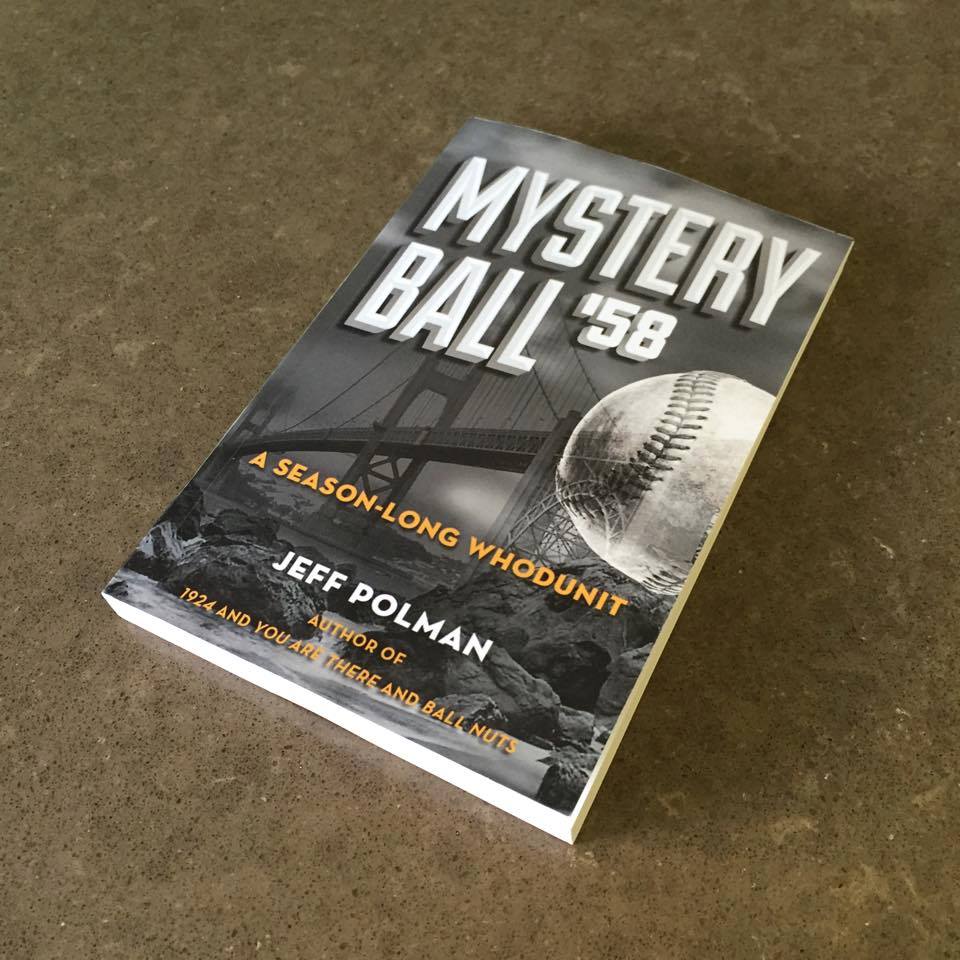
10599430_10205937680908737_8375732390110466652_nMYSTERY BALL ’58, the book version of my year-long replay blog from a few years back, has been published by the distinguished Grassy Gutter Press and is now available on Amazon.

Trust me, it’s a real fun read. Narrated in pulp detective style by Snappy Drake, a Seals Stadium usher who finds a dead body in his grandstand section after the very first game the Giants play in San Francisco, I wove a lot of colorful Bay Area culture into the narrative, and designed the interior of the book (matching Bethany Heck’s wonderful cover) to look as much like a 1950s Black Lizard Press paperback as I could. If you love baseball, mystery, and history, you should really dig it. And if you do, feel free to add a customer review on the Amazon page, whether it be anonymous or nonymous.

Right now I’m working diligently to set up some readings, signings, and podcast appearances, hopefully with a bunch in the Bay Area, where much of the story takes place. Stay tuned, pals…

Mia Farrow is a Force for Humanity

I love Mia Farrow. Dug her as an actress since Rosemary’s Baby, and she’s totally responsible for making my second favorite Woody Allen movie (Purple Rose of Cairo) work.

In the last few years I’ve been following her on Twitter, and have been amazed at the bottomless passion she brings to fighting global and domestic human rights violations. Check out this recent pictured tweet. Whenever I hear someone make a Cosby molestation joke on Bill Maher or Jon Stewart or on some late-night venue, half the studio audience reflexively groans, as if to say, “But he’s Bill Cosby!” Mia just comes right out and says fuck you, you’re a pig, and you don’t deserve to be working anymore.

Screen Shot 2015-02-27 at 10.56.36 AM

But she isn’t in attack mode at all times, either. Many of her tweets are photos of her serene Connecticut backyard and adjacent lake, or inside her house or of her adopted kids. As a celebrity she is way more open than most, and never comes across self-serving. I haven’t read her 1997 memoir What Falls Away, but still get a rich sense of her as a spirited human being who will do anything to help the planet. She’s not only a UNICEF goodwill ambassador and advocate for children’s rights, but has worked extensively to fight polio, which she survived as a child, and is one of the major activists for Darfur.

In case that isn’t enough, her 27-year-old son Ronan Farrow is an American activist, journalist, lawyer, and former U.S. government advisor. And if that isn’t enough, Mia had to survive two ghastly relationships with Frank Sinatra and Woody Allen. And to top it off, she just turned 70 on February 9th.

So yeah, I love Mia Farrow.

The Tracks of My Dreams

Switz

As I write the lead for this blog, I am riding in the front car of a high-speed Swiss train from Zurich to Geneva, on a grassy bank alongside Lake Neuchatel under a partially overcast spring sky. By the time I’m composing the fourth or fifth paragraph I will be on a different train somewhere else in Europe, or Asia, or the Congo, or if I’m desperate, Western Pennsylvania.

You think me mad? I am not. The Internet has electronically opened our world in a myriad of ways, some of them wonderful, some of them banal, and too many of them creepy, but sometimes you stumble across something you didn’t know existed that speaks to you in a way you didn’t even realize you like to be spoken to. In my case, it is a series of hi-def, no-cuts, YouTube train ride videos.

I’ve always been a secret admirer of trains, and train travel. To this day my parents insist that one of the first things out of my toddler mouth was “Beep-beep, tikka tikka!” when we drove under a railroad bridge one day that had a train passing over the top. A set of tracks for a New York City to points north Amtrak line passed through woods in my home town outside of Springfield, Mass., and me and my friends used to love walking them for half a mile or so any chance we could get. I even had one of my high school senior photos taken standing on those tracks, white denim jacket slung over my shoulder like a bad 1970s fashion model.

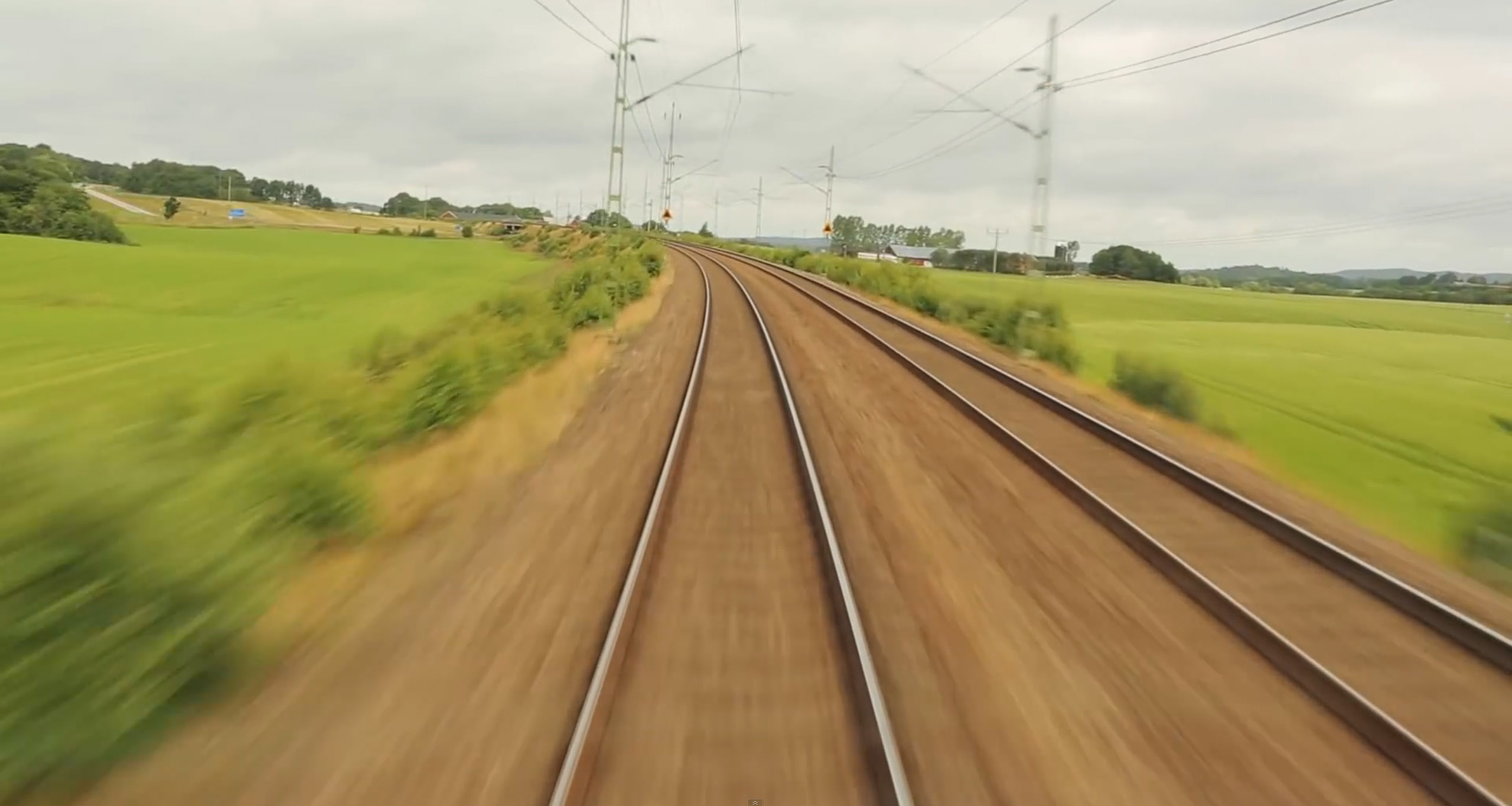
I’ve enjoyed watching videos taken from front seats of terrifying roller coasters for quite a while, but those are short and often make me queasy. Anyway, while watching one of those recently I noticed a side link to this Zurich to Geneva ride pictured at he top, two and a half hours in length, and I was hooked.

Now there’s no way I would sit and watch a video like this in one sitting; regardless of what you may have heard, I do possess a life. But fifteen minutes while flossing my teeth late at night? You bet. Keep it going in the corner of my screen while I work on an Excel file or something mindless? Uh-huh.

But sometimes I just want to be on a train that goes a bit faster, so thankfully there’s this high-speed rail journey in Taiwan that lasts 90 minutes and for most of the trip reaches a speed of just under 300 kilometers an hour, accompanied with goofy speed graphics and robotic announcements. The beauty of most of the videos I’ve found is that they have no narration and virtually no announcements, just the occasional clicks of the driver’s controls and soothing sound of wheels on track.

SwedishTracksIs the Taiwan ride a bit too straight and industrial for you? Okay, why not this one and this one, from a sunny, gorgeous route through summer Swedish countryside that resembles Central Vermont?

For the true intrepid cab ride train traveler, there is also this marathon, 7.25-hour trek from Bergen in western Norway, across most of the country to Oslo. I just watched the first 45 minutes and I can’t even begin to count how many tunnels, bridges and scenic rivers were part of the route.

Oh yeah, the tunnels. One needs patience when inside those. Sometimes they’re mercifully short, sometimes a bit long and the train has no headlights and it’s a little like riding through a tomb. But the good news is that there’s always light at the end of the tunnel and it’s always a thrill when you re-emerge.

Need a starter set? Okay then, here’s a sweet, 30-minute shorty, from Malmö to Copenhagen, Denmark. There are plenty of others in Spain and Germany to choose from, and even an hour and a half freight train ride from Pittsburgh to Connellsville in icky lo-def that’s going about as fast as my Saturn does in L.A. city traffic.

NordicTracksThe prize so far? Without a doubt, it’s this breathtaking epic, the final three-hour leg of a ten-hour journey on the Nordland line from Trondheim to Bode, Norway, a trip that takes you along fjords and up and down mountains and through woods and fishing villages and across a neo-Arctic plain flanked by sun-kissed peaks on both sides, everything covered in virgin snow that gives the train’s wheels a rolling, silky sound and is a more relaxing thing to watch before bedtime than anything else I can imagine. You don’t believe me? Go ahead. Put it on, advance to the 50-minute mark, and just try to turn it off. Just try.

Sweet dreams, travelers…

Why I Never Watch One Solitary Second of the Grammys

grammy-awards-2015-red-carpetLet’s get this straight from the outset: I love music. Can’t get through a day at work without having it on my headphones. Can’t drive a mile in my car without tapping my foot or bobbing my leg to something. Certainly can’t go for a solo walk in my neighborhood or up a trail without something groovy piping out of my earbuds.

But you will never catch me watching the Grammy Awards. Ever.

Music for me has become a pretty personal thing. I spent years recording mixes from CDs to my cassette deck, and now have at least three drawers of cassettes to prove it. This clunky activity has been thankfully replaced with downloads from iTunes or the Internet, but the usage of my music collecting has also changed, not just the nature. I used to make a habit of getting people into my car and trying to subject them to whatever my latest cassette or CD mix was, until I realized that’s a really hard thing to do. People tend to have their own personal tastes in a big way when it comes to music, and often resist anyone interfering with that. Hell, I know I would.

So these days it’s strictly Music for Jeff, and my electronic jukeboxes are in as many places as I can happily access.

The problem with the Grammys is that it seems to have much more to do with sales and corporate branding and publicity firms and the fashion industry and Hollywood than it does with actual music. After being a pretty big rock fan during the 1970s and early 80s, my musical preference changed 180 degrees when I moved to L.A. in ’82. A workmate soon turned me on to African music, which I made tapes of and went to see live for many years. Then another workmate introduced me to electronic music. Then another to Brazilian. Then I began exploring iTunes on my own and discovered wonderful sub-genres I never knew existed, such as retro lounge, downtempo, punk-a-billy, electro-funk, electro-swing, and other hybrids of every stripe. I have an amazing reggae version of a Christmas song sung by Billie Holiday.

All I’m saying is that music is everywhere in every form imaginable, encompasses so many styles and genres, and to pigeon-hole it into award categories (“Record of the Year”? Please.) is a fruitless, absurd endeavor. Music is not TV or the movies; it is a fluid, ever-growing part of our culture that we all can enjoy individually and should be cherished without being idolized, glitterized, and Kanye-ized.

Head down to the New Orleans Jazz Fest sometime and this will all become very clear. On the grounds of a giant racetrack every spring, music fills the air, one kind after another, from cajun to gospel to rock to reggae to Caribbean to whatever the hell, wafting over from various stages and out of big tents along with the aromas of devastatingly good food. It’s a giant cultural stew with no boundaries, pouring over the masses and meant to be gobbled up.

Music has been with us for seemingly ever, and to me, the Grammys represent everything that it isn’t.