Excavating the Game’s Past with Authors
Eric Nusbaum and Brad Balukjian
For reasons that are easy to fathom, the Great COVID Pandemic has put baseball on the back burner for many of us. While diehard fans can placate themselves temporarily with an endless supply of old games on YouTube or the MLB Network, not having the stream of daily box scores and radio calls on warm summer days has been tough to endure. Thankfully, a pair of new baseball books released in the spring—both of them passionate, original, and beautifully written—have done more to fulfill my baseball longing than anything else.
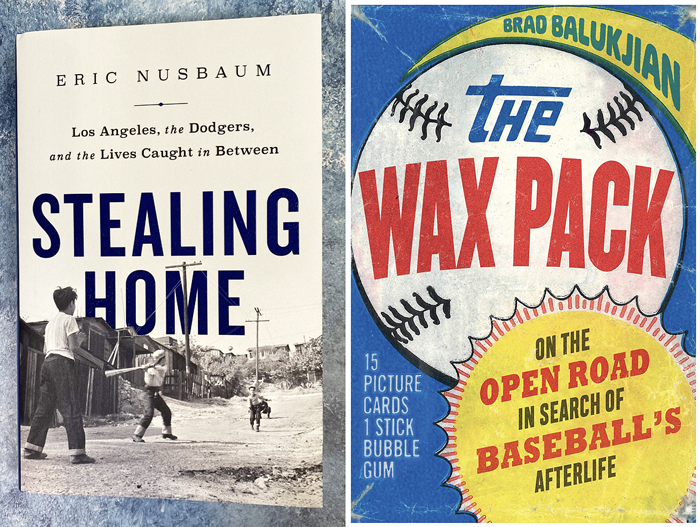
Stealing Home, by Eric Nusbaum (Public Affairs), is a moving, thoroughly researched account of the removal of the vibrant Mexican-American community living in Chavez Ravine, and how it ultimately made room for Walter O’Malley and his Dodger Stadium dream. By largely telling the story through the eyes and hearts of two completely different people, Abrana Aréchiga, the last ravine resident to be forcibly removed in 1959, and Frank Wilkinson, a left-leaning developer with a vision of building a utopian, low-income housing project on ravine land, the tragic fate of the community unfolds over the years with unforgettable power. After Wilkinson’s career is ruined during the Red Scare of the 50s, the city turned around and sold the land to O’Malley instead, who had a utopian dream of his own: a new palace for his westbound Dodgers.
Nusbaum’s ability to tell the Ravine’s sad tale and the city’s corrupt role in it with concise, often breathtaking prose is a wonder, and the book is filled with priceless anecdotes about the unseemly operators who populated the city and wedged their way into these proud families’ lives to change them forever.
The Wax Pack, by Brad Balukjian, (University of Nebraska Press) is seemingly from a crazier, more innocent planet, but is equally moving and rewarding. After purchasing a 1986 pack of Topps baseball cards on eBay, Balukjian vowed to personally visit the thirteen living ex-ballplayers whose cards came in the pack, driving around the entire country in his 2002 Honda Accord in the summer of 2015. He tracked down and spent time with Steve Yeager, Garry Templeton, Richie Hebner, Lee Mazzilli and less notables Rance Mulliniks, Don Carman, and Randy Ready (among others) and the different ways they responded to being out of the game are very revealing.
Balukjian never did get close to Vince Coleman, Doc Gooden, or Hall of Famer Carlton Fisk, but his futile pursuit of them is just as absorbing. Throughout, the author seamlessly weaves his personal dreams and desires and regrets with the lives of his “wax packers”, and it makes for a humorous and very emotional ride. The book has a simple, engaging concept with a driving force all its own, and like Nusbaum’s quiet historical epic, I can’t recommend it enough.
Recently I spoke to both authors via email, being sadly unable to meet them in a coffee shop…
In addition to writing these original, passionate books, I assume each of you had an interesting path to eventual publication. Can you tell me what those experiences were like?
NUSBAUM: First off, thank you! I don’t think “passionate” is a word I’ve heard used to describe Stealing Home before, but it is a passionate book. It’s definitely also a passion project, too. I had this book on my mind for more than a decade before I finally published it. I first learned about the events in Stealing Home even before that, from one of the central figures in the book, a man named Frank Wilkinson who visited my high school history class. Frank was a public housing official who was caught up in a Red Scare conspiracy, and whose fall in many ways left an opening for Walter O’Malley to bring the Dodgers to L.A.
Now that I reflect on it, I think my whole career as a writer has been building toward Stealing Home. It existed in my head long before I was ever fully able to explain it — and certainly long before I wrote it. I had a lot of false starts publishing the book. I pitched the concept to a bunch of agents with no success, and then had an agent for a while, but even he wasn’t thrilled about it. Sort of dejected at this point, I put the idea back in the drawer. A couple years passed, and I hooked up with a new agent and then came up with an entirely different book proposal (it was a history of L.A. told through the freeway system.) We sent this proposal out to an editor we thought might like it. But he also asked if I might happen to have any Dodger-related ideas…well, I did.
BALUKJIAN: The next time I write a book I am going to print out an early draft just so I can put it in a drawer. While I never literally did this with The Wax Pack, I can relate to Eric’s stutter-step history. I was trained in college in magazine journalism; the founders of New Journalism–Wolfe, Talese, Capote–these were my literary heroes. I was spoiled in college, getting to write long-form stories about whatever topics tickled me because they were just class assignments. When I got to the “real world,” I quickly discovered how hard it is to get a 3,000-word story published, let alone a 90,000 word one.
I wrote short pieces in my freelance career for years, while I also pursued my other career as an entomologist and evolutionary biologist. Once I finished my Ph.D. and could come up for air, the first thing I thought of was finding a project that would finally allow me to “go long.” I was always enamored with the 26-team era in baseball (1977-92) and the fringe players from that era (I had an album full of Tony Fossas, Don Carman, and Marty Barrett cards). I looked at a wax pack and realized that there was a physical resemblance between a pack and a book—rectangular shape, 15 cards in a pack, 15 chapters in a book. And I fell in love with the idea of being at the mercy of whatever random 15 cards would be in a single pack.
It then took six years from bell to bell to get this thing published, because I didn’t have a Twitter following the size of a small city and because apparently no one cares about Don Carman and Randy Ready. I’m glad the publishing gatekeepers were wrong about that.
While “Stealing Home” obviously required much thorough research to tell its story, “The Wax Pack” has a spontaneous, freewheeling, seat-of-your-pants structure—yet both books are permeated with heartfelt emotion. Could you elaborate a bit on your writing process, and how long did the actual book-writing take?
NUSBAUM: The book took my entire life! In all seriousness, there are passages of this book that I can trace back to writing and research I did when I was living in Mexico from 2012-2014. And I’ve been “thinking” about it even longer.
I think you reinvent your writing process every day, and with every piece you write. At least I do. At first I thought writing a book would be like writing a bunch of long-form magazine pieces and stacking them together, but with this story, which was really big and messy and complicated, that was not the case at all. I had to learn how to organize all these moving parts. It’s quite intricate and figuring out how to manage my data was challenging. I did a lot of reading, a lot of interviews, and a lot of archival research. Then at a certain point I told myself “okay you need to start writing.” Looking back now it almost feels like I was in a trance. Working a ton. Living with this material in a very visceral way. I was dreaming about the people in my book every night.
The more specific answer: I quit my job at Vice to work on the book full-time in early 2018. The book came out about two years later.
BALUKJIAN: Thanks. I like the seat of my pants. You’re right, there’s a lot of heart in both books. Eric’s research is truly prolific. I was awed by how much he packed into each page in such a compelling way. And while The Wax Pack is much lighter on the research, I did do an enormous amount of research on each player in advance of my road trip so I knew exactly what I wanted to ask them in my limited time. If you read my book carefully there is a lot of background work in there, it just hopefully isn’t too noticeable; as Eric Schlosser said, “Your writing should be like an iceberg. What you put on the page is like the tip of the iceberg. Everything else is there, even if the reader can’t see it.”
I spent an enormous amount of time on my proposal, which ended up at about 130 pages. This included chapter outlines and a couple of sample chapters. I reworked the proposal from late 2016 until late 2018, cycling through two agents and 38 rejections from editors, before finally striking a deal with the University of Nebraska Press. I then wrote most of the book in about five months. I laid out a schedule of writing a chapter about every ten days. I was able to write quickly because I had been mapping out the story for so long in my head, thinking cinematically in terms of a chronology of scenes. I do a lot of my writing in my head as I go through routine tasks like showering and brushing my teeth, so that when I sit down I’m ready to go. And I relate to Eric’s description of that writer’s high, that trancelike state.
Eric, I found “Stealing Home” less of a straightforward baseball book and more of a moving Los Angeles history with baseball as a backdrop. Was that always your original intention?
It really was. The more I researched and wrote and got into the story, the more I realized that it was more of a city story, or an America story, or even a family story than a baseball story. There’s obviously baseball in it—the book is about how L.A. got Dodger Stadium, after all. But that turn of events had more to do with subjects like immigration, public housing, the Red Scare, dirty politics, and on and on.
Baseball’s signature appeal for me has always been its rich, colorful past. Both of your books mine this history in different ways. How much has the game’s past contributed to your personal feelings about it and inspired your work?
NUSBAUM: I think what’s interesting is that Brad’s book and mine both sort of excavate the concept of nostalgia in different ways. Brad’s looking at this very personal experience of buying baseball cards, loving the Gods who appear on them, and then coming to terms with the fact that they are really men and everything that means. It’s a living history.
My book gets into boosterism and salesmanship and all the other stuff that happened to make these men into Gods in the first place. We’re both deconstructing mythology. He’s doing it with the players, and I guess I’m doing it with the mythmakers themselves a bit.
I love history, I love baseball. I love learning these stories, and I love telling them. The work of the book only made me more in awe of the vastness of this history. Every team, every city, every ballplayer, every pitch is a story.
BALUKJIAN: What Eric said. Ha ha, no, he’s right on there. The deconstruction of mythology is exactly it. When I was writing some blog posts on my road trip, one of the players, Don Carman, texted me and said, “You know you’re going to make some people angry.” I didn’t know what he was talking about at first, but I realized that yes, I was messing with some people’s childhoods. I was telling them that their heroes were mortal, flawed, sometimes angry. A lot like them. And you and me. It takes a certain courage as a journalist to tackle something you’re personally passionate about and to look it in the eye and say, “there are parts of you that I don’t like or agree with.” On the whole, though, I love baseball even more after writing this book. Because it’s really just another entry point into what we all crave, which is connection and emotion.
If a publisher offered either of you a deal to write a sequel to your books, would you consider it or prefer moving on to a completely new idea?
NUSBAUM: I don’t think I could do it! The story I wrote really ended with the opening of Dodger Stadium in 1962. There are some really great books about the Dodgers and L.A. in the years following Stealing Home. I’m talking specifically about Michael Leahy’s The Last Innocents and Jason Turbow’s They Bled Blue about the 1981 Dodgers and Fernandomania. Plus Jason is one of the founders of the Pandemic Baseball Book Club with us and everybody should definitely buy his book.
I’d also add that the soul of Stealing Home is really with the communities of Palo Verde, La Loma, and Bishop that were destroyed first to make way for public housing and later Dodger Stadium. I hope other writers and scholars continue to do work that honors the history of those communities.
BALUKJIAN: Nope. While another road trip would be fun, a sequel would lack the novelty and creativity of the original. Besides, outside of Star Wars and The Godfather, name me a sequel that lived up? Too often creative types return to the same material for the wrong reason ($). Even if I tried, I know a sequel wouldn’t be as good because I wouldn’t believe in it the same way. Writing a book is an act of faith, not science.
How do you feel about the current and future state of baseball, particularly in this pandemic age? And what teams do you root for, anyway?
NUSBAUM: I love the game. Lots of exciting young players! The Dodgers (who I root for) might finally win a World Series soon! But I’m skeptical about whether the current crop of owners really cares about growing the sport and making it sustainable long term. It seems to me that the folks who run baseball always prioritize short-term cash grabs over the health and sustainability of the sport. This segues me into the “season” they are about to play. It strikes me as delusional and selfish and deeply misguided to try and play baseball right now. But Brad is an actual scientist. Let’s listen to what he has to say about it!
BALUKJIAN: F the Dodgers. I’m a Phillies and A’s fan (but gun to my head, I go Phillies first). I agree with Eric that they should not play this season due to COVID. This notion that the country “needs sports” is overblown. Sure, I would love to watch baseball, but baseball players are not essential workers. And I think we’re asking for a lot of trouble starting up again.


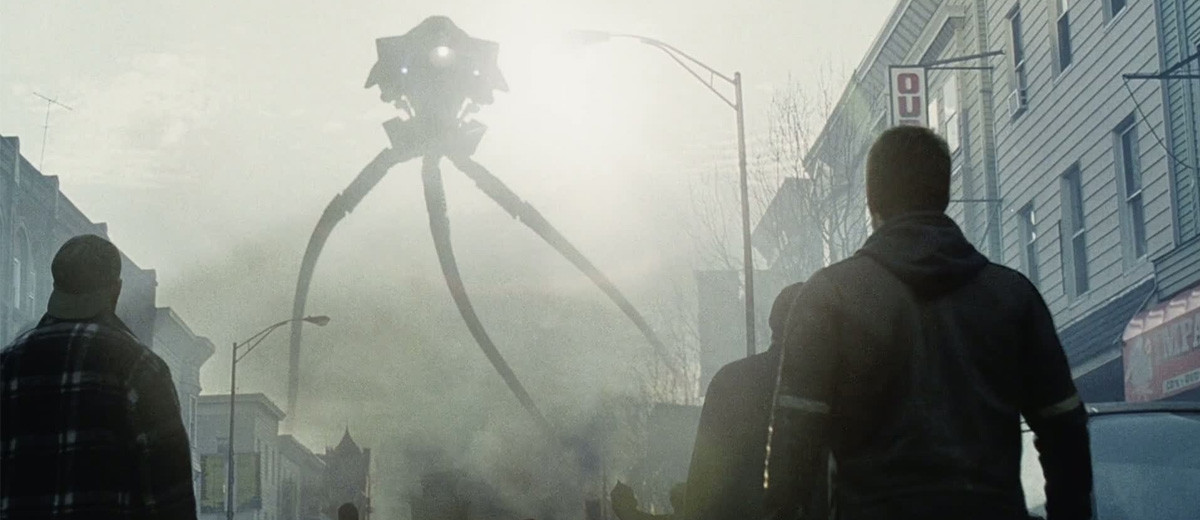 I have a strange pet peeve about The War of the Worlds movies.
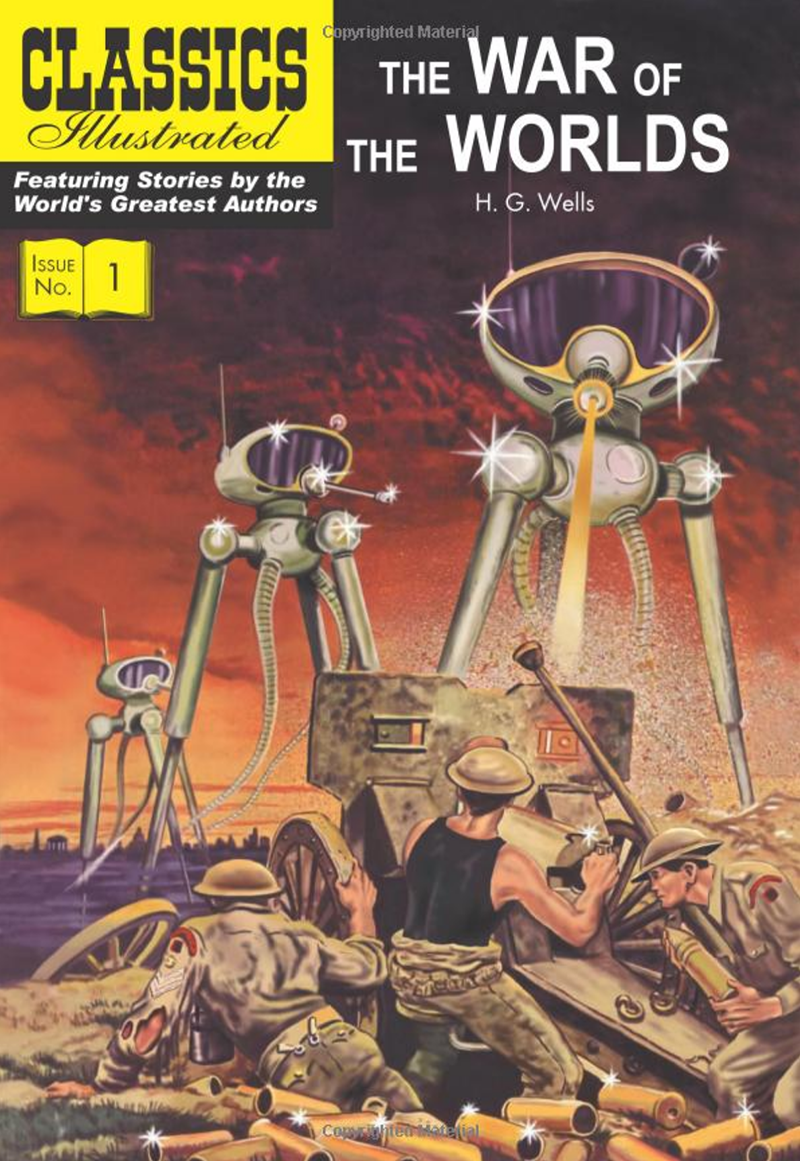 Aside from being an incredibly vivid, graphic, and moving tale recounting a series of days that nearly erased humanity, the best thing about the book is that it’s set in Victorian England. The images of Martians walking through the idyllic English countryside inside towering, metal tripods and laying waste to everything is what makes the book so unique and startling. It’s like a Merchant-Ivory drama with heat rays. Wells’ creation of having the Martians shoot from their planet in a series of cylinders that arrive as meteors is also brilliant, especially given the lack of science fiction writing at the time—outside of Jules Verne.
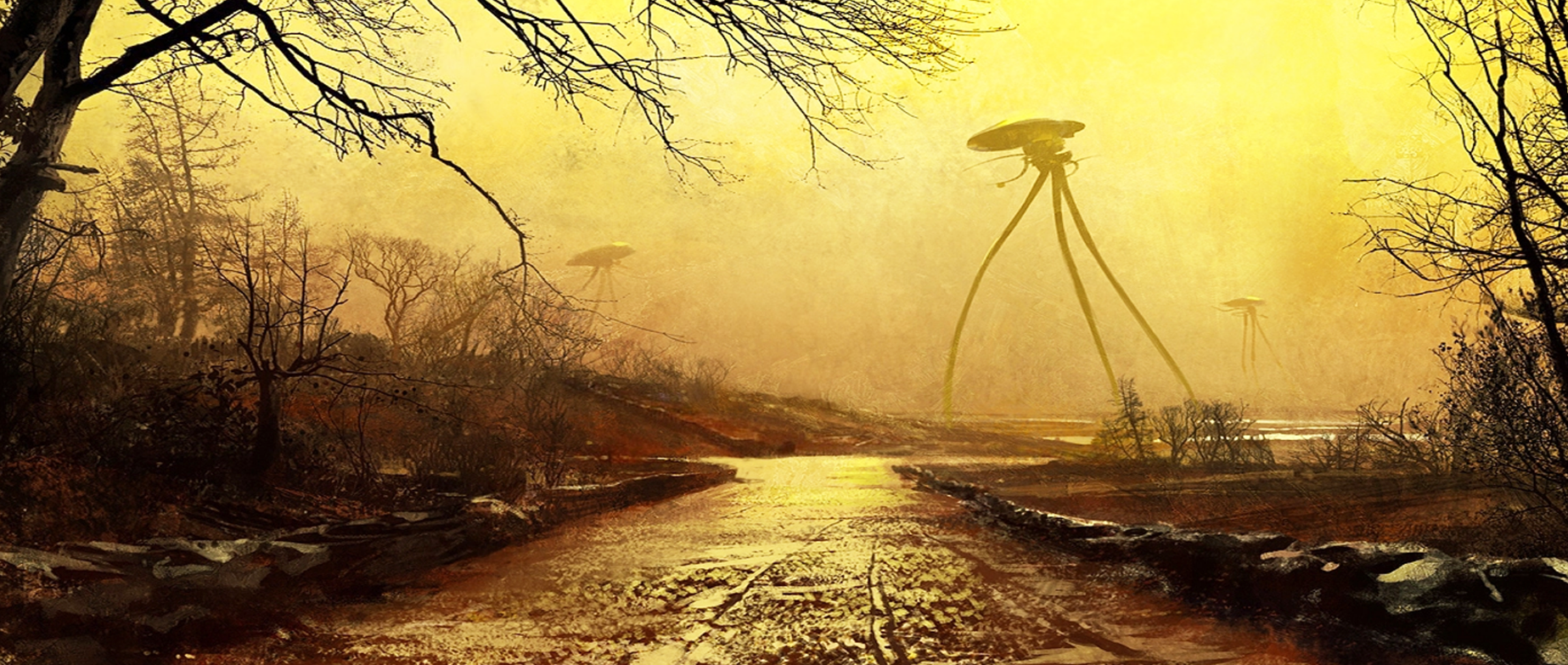 Back in 1998, a War of the Worlds TV series lasted for two seasons, and I’m glad I missed that one altogether. Apparently the bacteria that saved civilization from the Martians in 1953 was destroyed by radiation, and the Martians then came back to take over human bodies, a la Invasion of the Body Snatchers. Nice try.
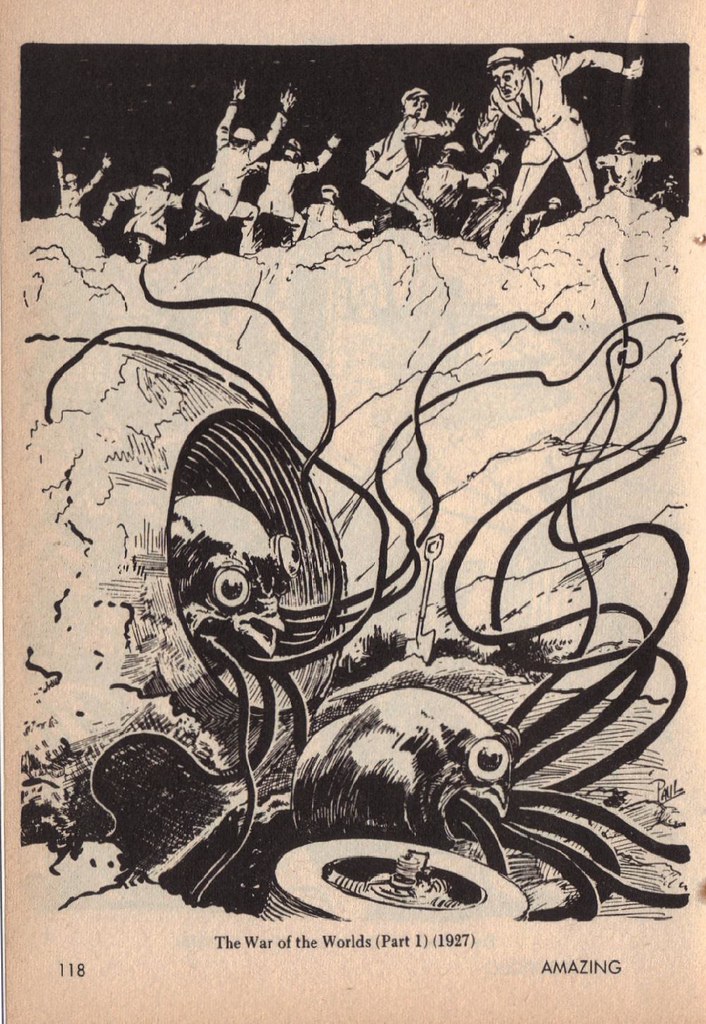 I don’t mean to sound like a line from a bad action movie, but these producers just don’t get it, do they? The accompanying illustrations perfectly capture the contrast between everyday life and alien horror that Wells’ novel details on practically every page. Having re-read the book again recently, what comes through even more now is the way citizens learned of alarming news back in that era. There was no television, no social media, or even telephones. The coming of the Martians, as word slowly spread by word of mouth from one quaint village to another, was scarcely believed. If a filmmaker ever makes a version that is genuinely true to the cinematically-written novel, they could deliciously underline this irony—from the sand pit on Horsell Common to the rubble in London.
 After I moved to L.A. in 1982 for the singular purpose of writing and selling screenplays (written:20, sold:2) I took a Story Structure class with the well-known script guru Robert McKee. We did in-depth studies of Casablanca and Chinatown, and I fully absorbed most everything he said for those few months. The simplest thing he said, though, may have been this: a successful script is a good story that is well-told.
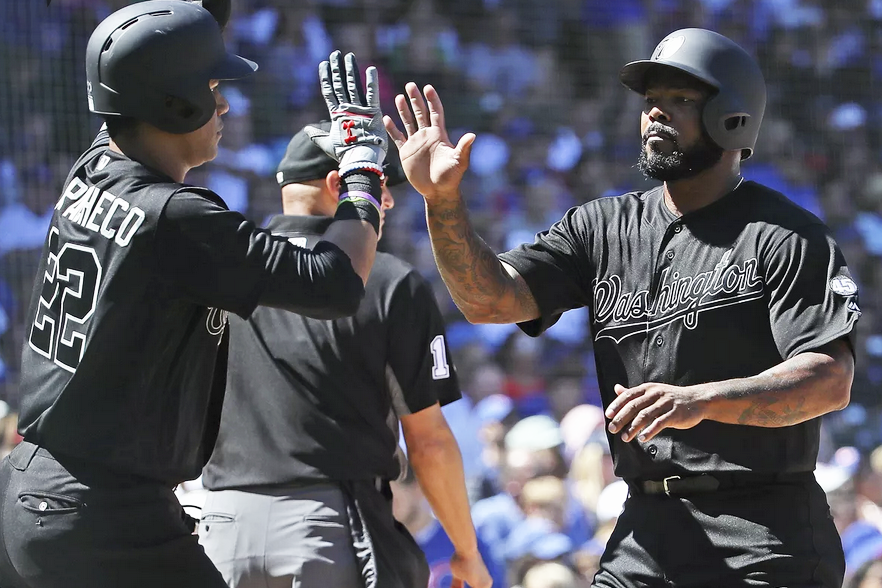 I needed a little distance to be able to talk rationally about the World Champion Washington Nationals. Or maybe I just needed to recover from the shock of the miracle they pulled off. Ten games out of first with a 19-31 record on the morning of May 23rd after their arson squad bullpen surrendered six runs to the Mets in the bottom of the 8th the night before, they went 86-43 the rest of the way, including the postseason, for a .667 winning percentage.

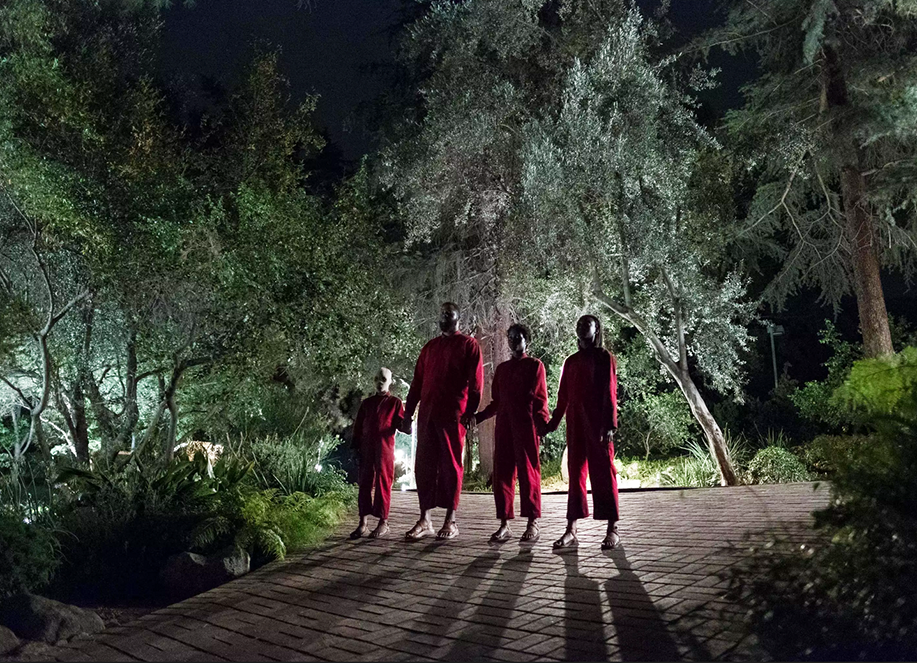 Okay. I know I run the risk of being called unhip, out of touch, behind the times, or the worst and most tired insult of all: an old guy on a porch. I don’t care. Jordan Peele’s Us is one of the most overhyped films in recent memory, and in my longtime favorite genre of horror, a stunningly missed opportunity.
 Sometimes when I’m rushing to get to work and haven’t had time for a proper breakfast at home, I’ll stop at a fast food place near the office to nab a small, improper one. But the other day I walked in a McDonald’s that had apparently been recently remodeled, and found myself staring at an “ordering kiosk”.