
 I needed a little distance to be able to talk rationally about the World Champion Washington Nationals. Or maybe I just needed to recover from the shock of the miracle they pulled off. Ten games out of first with a 19-31 record on the morning of May 23rd after their arson squad bullpen surrendered six runs to the Mets in the bottom of the 8th the night before, they went 86-43 the rest of the way, including the postseason, for a .667 winning percentage.
No one admits they saw this coming—except me.
The weekend of August 23-25, I watched their entire three-game series at Wrigley Field against the Cubs—who were also a good team embedded in a pennant race. The Nats won all three games, on hostile turf, and made Chicago look like amateurs. Fresh from crushing the Pirates in Pittsburgh by scores of 11-1 and 7-1, they took the first two Wrigley games fairly easily by 9-3 and 7-2 scores, then in the Sunday game, to quote a line Bill James once used about the 1985 champion Royals, they played “like they had pepper in their jockstraps”. They took a 1-0 lead and the Cubs tied the game. They took a 2-1 lead and the Cubs tied the game again. They took a 5-2 lead and the Cubs tied the game again, before they finally scored two in the 11th to win the game in extras. Anthony Rendon and Juan Soto went a combined 7-for-11.
I took to Twitter immediately afterward and predicted that if the Nationals faced the Dodgers in the playoffs, they could beat them. A number of first responders said I was insane, but I had seen what this team could do—on the road against a contender—and more than anything sensed a relentless winning chemistry I had yet to feel from the Dodgers in any of their recent postseasons.
Two Labor Day weekends ago, I sat through a rain-drenched doubleheader at Nats Park with my brother. It was also against the Cubs and they won both games, but it was obvious at the time that much of the crowd and the media were fixated on What Bryce Was Doing, meaning “best player on the team” Bryce Harper, who went off to Philadelphia and a gigunda contract in the off-season. Bryce had amazing talent but also spells of lazy selfishness, and seemed to me to be a distraction in the clubhouse. With him finally leaving, it’s easy to see how the team could come come together in a new atmosphere guided by laid-back new skipper Dave Martinez. And because national baseball broadcasts are obsessed with Red Sox/Yankee, Dodgers/Giants and Cubs/Cards matchups to the detriment of most other teams, it’s easy to see why “nobody knew” how good Rendon and Soto were, keeping the club under the radar and helping them focus on the ultimate prize.
I have also been drawn to the team for personal Expos reasons. The Nats franchise, as most of you know, was born in 1969 north of the border, where I watched them play numerous times in their late ‘70s and early ‘80s heydays. Screwed out of a postseason appearance by the 1994 strike, when baseball play ended on August 11th with the Expos holding a 74-40 record, it was a nice touch of the Nationals to flip the stylish Montreal “M” on their hats upside down to create the Nationals’ “curly W” once the team moved.
But while the Nats’ “upset” of the Dodgers in the National League Division Series wasn’t exactly a shock, their sweep of the Cardinals to win the pennant certainly was, and their all-road defeat of the really good Houston Astros was beyond belief. Don’t be surprised if we never a witness a World Series won entirely by the away teams ever again.
The Nats hit timely home runs and got great pitching, for sure, but especially in the concluding game, they also made contact and stroked opposite field hits to beat shifts—something precious few players know how to do in these days of launch velocity. It was certainly unfortunate that the delirious Washington D.C. fan base, who went completely out of their minds when the Nats got three runs in the 8th to beat Milwaukee in the Wild Card game, didn’t get to enjoy a home victory in the World Series, but I think they more than made up for it on their weekend of parading and partying.
So did their ace hurler Max Scherzer, shown below dancing with fans in a local bar. If nothing else, the 2019 Nationals may be the most likeable, curse-defeating bunch of guys to ever walk our green fields.




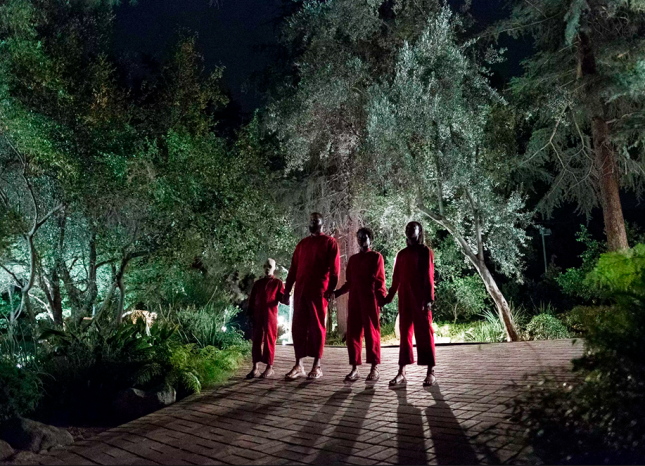 Okay. I know I run the risk of being called unhip, out of touch, behind the times, or the worst and most tired insult of all: an old guy on a porch. I don’t care. Jordan Peele’s Us is one of the most overhyped films in recent memory, and in my longtime favorite genre of horror, a stunningly missed opportunity.
 Sometimes when I’m rushing to get to work and haven’t had time for a proper breakfast at home, I’ll stop at a fast food place near the office to nab a small, improper one. But the other day I walked in a McDonald’s that had apparently been recently remodeled, and found myself staring at an “ordering kiosk”.
 Next year marks the 40th anniversary of the greatest sci-fi film ever. Or at least, the greatest one in my book.
 For about five years in the late ‘70s and early ‘80s, I went to see NHL games at the old Montreal Forum. I was living about two hours south in Burlington, VT. One of my roommates was a huge fan of the Canadiens, so often assembled mini-caravans over the border so he could cheer on the Habs. I was and still am a devout Boston Bruins fan, so our fandom was rarely in sync, but there was one visual I associated with those trips that has always stayed with me: Guy Lafleur, Montreal’s dashing, legendary right wing, streaking down the ice toward the enemy net. Even from high up in the smoke-filled rafters—which through brilliant arena design had sight lines directly over the rink—you could see Lafleur’s slightly balding dome, his sideburns, and his sandy, longish hair flying behind him over his classic red jersey as he skated. When he made his signature move it literally put the home crowd into a frenzy.
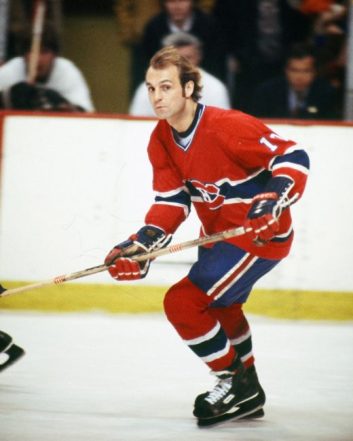 Earlier in the 70s, the Philadelphia Flyers, also known as the Broad Street Bullies, had a bunch of guys with crazy curly hair and few teeth. Bob Nystrom of the New York islanders had Lafleurian hair and a snappy moustache to go with it. Ron Dugauy of the New York Rangers had a rock star mane. Watching on lousy Magnavox TVs back then, you could identify most of the hockey players on the ice even when you had issues seeing the puck. You could see their faces and expressions. You knew their character.
 Whether at the arena or on television, hockey is often viewed from center ice, a few sections up, allowing you to take in the speed and grace and circular movement of the players’ lines. With ten combined goals in one game considered a “slugfest”, the sport lends itself to drowsiness at times, especially in low-scoring contests. And with the helmets obscuring every player’s hair and face and the camera usually too far away from reading the names on the backs of the jerseys, I find it very difficult to differentiate them, and the action can lull me to sleep much faster.
 One of my favorite things about the New Era of Downloading is the freedom you suddenly have to be your own record producer. Remember the days when you liked one or two songs on a new release and were forced to spring for the entire album if you wanted them? That was almost as annoying as having to fast-forward and rewind your cassette for five minutes just to find a particular track!
 Frank Sinatra’s “Summer Wind” was my favorite tune of his for a long time but I never had a copy of it, so one day I went on iTunes and typed it in the search window. Lo and behold, there were well over 100 versions of the song available from various artists—everyone from Julio Iglesias to Madeleine Peyroux to the Swingin’ Fireballs. It took a little time and cost me around $25, but I downloaded the best two dozen or so versions of the tune from that initial list of 100 and made myself a fun, swanky playlist called Summer Winds that runs for an hour and a half.
 I have since done this same thing with Marvin’s Vineyard (50 different versions of “Heard it through the Grapevine” by Marvin Gaye), 24 versions of Irving Berlin’s “Cheek to Cheek”, and just recently, 25 awesome versions of “96 Tears” by Question Mark and the Mysterians.

 For starters, Michael Wadleigh’s document of the festival is still an amazing technical achievement. Using a dozen cameras, his multi-angle and split-screen views of the best performances capture every moment of their excitement, particularly the raw, unbridled power of Joe Cocker’s “With a Little Help From My Friends,” the Latin rock ecstacy of Santana’s “Soul Sacrifice”, and Sly Stone’s funky epic version of “Wanna Take You Higher”. The interviews with concertgoers, town residents, snippets of dialogue from some of the artists, even words from a port-a-potty cleaner create a fascinating mosaic of Woodstock’s populace, and there is so much more Wadleigh shows without using even one second of narration. Forget the skinny-dipping and mud-sliding; the shots of gridlocked back roads and endless lines of young attendees trying to call their parents at a small bank of pay telephones are staggering. (“How did they ever pull this thing off without cell phones?” I asked my wife.)

 With a mere droop or turn of his head as the lonely spectre glides through days and weeks and months and generations, so much is said about love and loss without one line of dialogue being uttered. A Ghost Story is a tour de force that in the end is nothing short of miraculous. It also has a tad of mystery and ambivalence at the conclusion but that only makes you want to discuss the film with someone even more.
 Jeff Polman